Siddhart Jai Singh (Urologist)

Dr Siddharth Jai Singh

Testicular Cancer Symptoms, Causes, Treatment and Care by Dr. Siddharth Jai Singh

Testicular Cancer Symptoms, Causes, Treatment and Care by Dr. Siddharth Jai Singh A lump can be serious. Sometimes a lump doesn’t amount to anything. Other times, a lump could be a symptom of testicular cancer. Learning what to look for could save your life. Testicular Cancer starts in the testicles. It is a type of testicular malignancy. It mostly affects young men. The good news? It is highly treatable. Especially when caught early.   It may sound scary. But awareness changes everything. What is Testicular Cancer? Testicular cancer is a cancer that occurs in one or both testes. Testes are organs that are part of the male reproductive system and produce male hormones and semen. There are two oval shaped organs located in a sac called the scrotum, which hangs behind the penis. You can develop cancer in either one or both of your testicles.   Testicular cancer is the most common malignancy in men aged 15 to 45 years and represents one of the most common curable malignancies when identified promptly and treated with a multimodal approach. It represents 1% of male tumors and 5% of urological malignancies.  What are the Types of Testicular Cancer? Testicular Cancer isn’t just one type. Doctors divide it into two main groups. Knowing the type helps plan treatment. 1. Germ Cell Tumours These are the most common types. Over 90% of cases fall here. They start in sperm-producing cells. This group has two main types. SeminomaThis type grows slowly. It usually affects men aged 25 to 45. It responds very well to treatment. Radiation therapy works effectively here. Non-SeminomaThis type grows faster. It’s more common in younger men. It includes several sub-types: Embryonal carcinoma Yolk sac tumor Choriocarcinoma Teratoma Non-seminomas often need chemotherapy. Sometimes a mix of treatments is used. 2. Stromal Tumours These are rare types. They start in the supporting tissue. Not in the sperm-producing cells. Two types fall under this group.   Leydig Cell TumoursThese cells produce testosterone. Tumours here are usually non-cancerous. Surgery often treats them fully. Sertoli Cell TumoursThese cells support sperm production. Tumours here are also rare. Most are non-cancerous, too. What Causes Testicular Cancer? Doctors don’t always know the exact cause. But certain factors raise the risk. Here are common Testicular Cancer causes: Undescended testicle at birthThis is called cryptorchidism. The testicle does not descend into the scrotum and remains trapped within the abdomen. This significantly increases the risk of cancer in later life. Even if surgically corrected, there remains a small risk in future years. Family history of testicular cancerGenetics play a role here. If your father or brother had it, your risk increases. It doesn’t mean you’ll definitely get it. But awareness helps you stay alert. Age between 15 and 40This is the most common age group. Testicular Cancer rarely affects older men. Young men should not ignore symptoms. Early life stages carry higher risk. Abnormal testicle developmentSome men are born with this condition. The testicle doesn’t form properly. This includes conditions like Klinefelter syndrome. It can quietly raise cancer risk. HIV infection in some casesHIV weakens the immune system. A weak immune system can’t fight abnormal cells well. This slightly raises cancer risk. Regular health checks matter more in such cases. Not everyone with these risks gets cancer. But it’s good to stay alert. What Are the Symptoms of Testicular Cancer? Spotting symptoms early is key. Watch out for these Testicular Cancer symptoms: A lump in either testicle.This is the most common sign. It’s often painless at first—even a small, pea-sized lump matters. Don’t wait for it to grow. Swelling or heaviness in the scrotum.One side may feel heavier than the other. The change can be sudden or slow. It may not hurt at all. Still, get it checked. Dull ache in the lower belly or groinThis pain feels mild but constant. It may come and go. Many men ignore it as normal. But it shouldn’t be brushed aside. Sudden fluid build-up in the scrotumThis is called a hydrocele. The scrotum looks swollen and full. It can happen quickly. A doctor can confirm the cause. Pain or discomfort in a testicle. Pain levels vary from person to person. Some feel sharp pain. Others feel just mild discomfort. Either way, don’t ignore it. Some men feel no pain at all. That’s why self-checks matter. A monthly check takes just two minutes. How is Testicular Cancer Diagnosed? Doctors use a few simple steps. First, a physical exam. Then, an ultrasound scan. Blood tests follow next. These check for tumour markers.   If results raise concern, more tests are done. A biopsy is rare here. Most diagnoses happen through scans and blood work.   Early diagnosis improves outcomes massively. So don’t delay a check-up. Testicular Cancer Treatment Options Treatment depends on the stage. There are several options for Testicular Cancer Treatment:   Surgery: This is the first step. Urologists remove the affected testicle. It’s called an orchiectomy. The other testicle still works fine. Fertility is usually not affected.   Radiation Therapy: This targets any leftover cancer cells. It’s common in certain types of testicular cancer.   Chemotherapy: Chemotherapy is used for advanced stages. It kills cancer cells throughout the body. Several cycles may be needed.   Surveillance: Sometimes, doctors just monitor closely. This is for early-stage, low-risk cases.   Each treatment plan is personal. Dr. Siddharth Jai Singh designs a plan for your specific case. Life After Treatment Most men recover well. Fertility often stays normal. Hormone levels usually remain stable, too. Regular follow-ups are important. They catch any return early.   It’s also important to get the emotional support that you need to get through the day. Speak with your doctor, speak with your family. Don’t give up, you are not in this alone. Why Early Detection Matters Testicular Cancer has one of the highest cure rates among cancers. But this depends on early action. A small lump today could be nothing. Or it could be everything. Either way, checking is free. Ignoring it is risky.

Testicular Cancer Symptoms, Causes, Treatment and Care by Dr. Siddharth Jai Singh Read More »

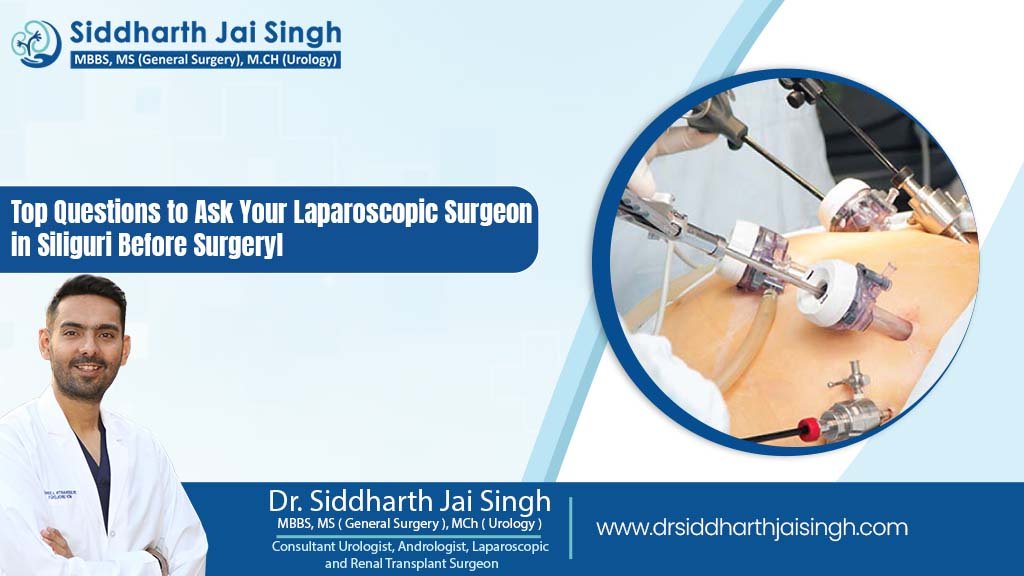
Top Questions to Ask Your Laparoscopic Surgeon in Siliguri Before Surgery

Top Questions to Ask Your Laparoscopic Surgeon in Siliguri Before Surgery It is not only a matter of making a confident, informed choice when it comes to a medical decision in choosing the right Laparoscopic Surgeon in Siliguri. The laparoscopic operation is very minimal and it depends on the skills of the hands that carry out the operation. In case you are to be operated on particularly in the hands of Dr. Siddharth Jai Singh then it is advisable to ask the right questions so that you get a clear picture of your situation, what is going to be done and how you are expected to heal. Why Is There a Need for a Laparoscopic Surgeon in Siliguri ? A good Laparoscopic surgery expert operates with minimal incisions with the help of a camera and other specialized tools. In comparison to conventional open surgery Laparoscopic surgery has:   Minimal scarring Less postoperative pain Shorter hospital stay Faster return to daily life Reduced infection risk Nevertheless, the results are determined by the accuracy of surgery operations, experience and high-level training. This is the reason why most patients are particularly seeking the Best Laparoscopic Surgeon in Siliguri prior to making up their minds. Are You Trained in Advanced Laparoscopic Surgery? All surgeons are not trained in high-tech techniques. A highly trained Laparoscopic Surgeon is prepared to deal with the complicated cases using the new surgical equipment and latest procedures. Dr. Siddharth Jai Singh has been credited with the application of modern laparoscopic techniques which enhance precision and safety of patients. Enquiring on certifications and experience on high-level procedures can make you know the expertise of your surgeon. Is Laparoscopic Surgery the Right Choice for Me? Although in most instances minimally invasive surgery is the way to go, not everyone can always be subject to this. An ethical Laparoscopic Surgeon in Siliguri will describe:  The reasons why laparoscopic surgery should be performed. Alternative methods of treatment Risks involved Expected outcomes In case your condition has anything to do with kidney or urinary related dealings, you might also like to inquire whether your surgeon works or is considered to be one of the Best Urology doctors in Siliguri when it comes to a specific procedure. What Tests Do I Need Before Surgery? There are some assessments that are required before surgery. Your doctor may advise: Blood tests Imaging scans A Laparoscopic Test of diagnosis Create a habit of enquiring of the purpose of every test and approximate cost of Laparoscopic Test Price, lest you get financially and medically unprepared.  What Are the Potential Risks and Complications? Although Laparoscopic Surgery has been deemed safe, there is no surgery that is risk-free. Discuss:   Bleeding possibilities Infection risks Reaction to anesthesia Risk of transitioning to open surgery These factors will be explained to you by an experienced Laparoscopic specialist, who will be honest with you, and is sure to assure you with preventive measures. What Is the Recovery Timeline? The healing process takes a long period based on the operation and your health. You want to know about:   Length of hospital stay When you can resume work Activity restrictions Post-surgery diet Follow-up visits Clear instructions help the healing process to proceed with less complications. How Much Would the Entire Procedure Cost? Besides Laparoscopic Test Price, the entire breakdown is: Surgeon’s fee Hospital charges Operation theatre cost Anesthesia charges Post-surgery medications Price disclosure indicates a sense of professional ethics as well as trust. What Technologies and Equipment Are Utilized? The modern laparoscopic surgeries are very dependent on the high quality in the imaging systems and the level of instruments. The decision to select the Best Laparoscopic Surgeon in Siliguri implies the selection of a surgeon with modernized equipment and adhered to the current standards of surgery.   Dr. Siddharth Jai Singh is a medical professional who integrates both clinical and new technology in order to improve surgical results. What Are the Various Factors Behind Trusting Dr. Siddharth Jai Singh? The factors that patients seeking a good Laparoscopic Surgeon in Siliguri usually take into consideration are:   Knowledge in complicated surgeries Ethical consultation Clear communication High level laparoscopic skills Personalized patient care   Such standards have been upheld by Dr. Siddharth Jai Singh who makes sure that each patient gets comprehensive and safe treatment.   Frequently Asked Questions (FAQs) Q1. Is laparoscopic surgery safer as compared to open surgery? Yes, laparoscopic surgery is safe in most cases as it has smaller incisions, reduced chances of infections and may be cured more quickly. Nonetheless, it is appropriate depending on personal illness conditions. Q2. What is the time required for laparoscopic surgery? The majority of the procedures take 30 minutes up to 2 hours based on the complexity. Q3. Will I be left with some scars after a laparoscopy? The scar is minimal and normally small as compared to the traditional open surgery. Q4. When can I resume normal life? Most of the patients resume normal activity within a few days and normal life within 1-3 weeks. Final Words An operation is also a big decision and the right questions will make you strong. Siliguri has an experienced Laparoscopic Surgeon in this region, thus guaranteeing accuracy, safety, and a less strenuous healing process.   If you are planning to undergo minimally invasive surgery, consult Dr. Siddharth Jai Singh for expert advice, quality care, and a personalized treatment approach. Book your consultation today to take the first step toward the right treatment plan.

Top Questions to Ask Your Laparoscopic Surgeon in Siliguri Before Surgery Read More »

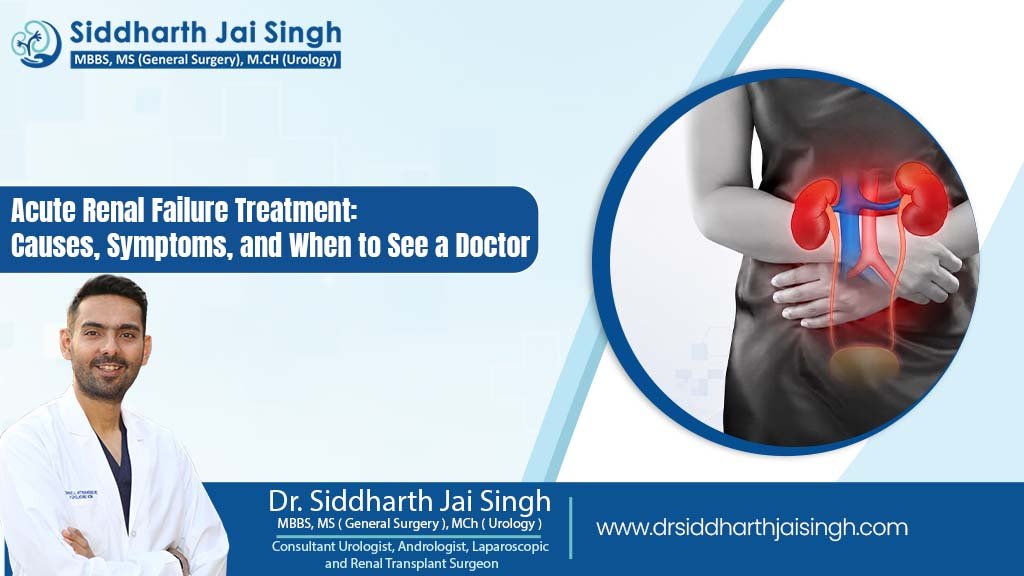
Acute Renal Failure Treatment: Causes, Symptoms, and When to See a Doctor

Acute Renal Failure Treatment: Causes, Symptoms, and When to See a Doctor Most people think kidney disease is something that creeps up slowly over the years. Sometimes it does. But sometimes it does not. Treatment for AKI requires an emergency medical procedure so that it would prevent potentially lethal and irreversible diseases, which can ultimately cause irreversible kidney damage. AKI (Acute kidney injury) is a disease which suddenly affects someone, at times even in the span of a few hours or days. This incapacitates the kidneys’ function of removing the wastes in our blood. The good news? When caught early, it can often be reversed completely. That is why understanding Acute Renal Failure Treatment is not just medical knowledge. It is something every person should have. When compared to chronic kidney conditions, which develop overtime (slowly), Acute Renal Failure requires emergency care. The correct treatment of Acute Renal Failure and timely diagnosis could greatly help in recovery. What Is Acute Renal Failure? Acute Renal Failure is used to refer to the activity of the kidneys. The kidneys are charged with the responsibility of eliminating toxins, electrolytes, and fluid levels. The stoppage in their proper functioning leads to the deposition of harmful wastes in the body. What Causes Acute Renal Failure? Your kidneys are tough. They filter around 200 litres of blood every single day without complaint. But even tough organs have breaking points. Acute Renal Failure does not happen randomly. There is always a reason behind it. And finding that reason is the first step towards the right treatment. Here are the three main ways kidneys can suddenly fail. 1. Not Enough Blood Reaching the Kidneys Your kidneys need a steady flow of blood to do their job. When that supply drops for any reason, they go into distress fast. Think of it like a factory that suddenly loses its power supply. Everything stops. This can happen because of: Severe dehydration -not enough fluids in the body means not enough blood volume Heart attack or heart failure -when the heart struggles, blood flow to the kidneys drops Major surgery -the body goes through enormous stress and blood flow gets redirected Severe infections or sepsis – a dangerous infection can cause blood pressure to crash suddenly Heavy blood loss -from an injury or internal bleeding The kidneys are not damaged yet at this stage. But if blood flow is not restored quickly, the damage begins. 2. Direct Damage to the Kidney Tissue Sometimes the kidneys themselves come under attack. The damage happens inside the organ, to the tiny filtering units that do all the work. Once enough of these are damaged, the kidneys simply cannot keep up. Common causes include: Certain medications -some antibiotics, painkillers, and chemotherapy drugs are hard on the kidneys, especially in high doses or over long periods Sepsis -severe infection does not just cut the blood supply. It also releases toxins that directly damage kidney tissue Autoimmune diseases -conditions like lupus can cause the body’s immune system to attack the kidneys Contrast dyes -used in some imaging scans, these can sometimes harm the kidneys, especially in people who are already vulnerable Toxins and poisons -certain industrial chemicals, heavy metals, and even some herbal supplements can be surprisingly damaging. This type of kidney failure can be harder to reverse. The speed of diagnosis really matters here. 3. A Blockage Stopping Urine From Draining The kidneys filter blood and produce urine. That urine needs to leave the body. When something blocks that pathway, pressure builds up inside the kidneys. Over time, that pressure causes serious damage. Blockages can be caused by: Kidney stones – small but capable of causing enormous problems when they get stuck. An enlarged prostate – enlarged prostate is very common in older men and a frequent cause of urinary blockage. Tumours – pressing on the urinary tract from inside or outside. Blood clots – blocking the ureter, the tube that carries urine from the kidney to the bladder. The good news with blockages is that once they are cleared, the kidneys often recover well. But only if the blockage is caught and treated in time. Symptoms of Kidney Failure The problem is not that the symptoms are invisible. The problem is that they are easy to explain away. Tired? Must be a long week. Swollen ankles? Probably been on your feet too much. But your body is sending signals. And these signals matter. Reduced urine output-When they start to fail, that output drops. You may notice you are going to the bathroom far less than usual. Or when you do go, very little comes out. Do not ignore this. It is one of the clearest early signals that your kidneys are struggling. Swelling in legs and ankles-When they stop working properly, that fluid has nowhere to go. It builds up -especially in the legs, ankles, and feet. You may notice your shoes feel tighter. Your ankles look puffier than usual. It can feel harmless. It is not. Fatigue or confusion- Those toxins affect your entire body -including your brain. You feel exhausted even after a full night’s sleep. Your thinking feels foggy. Simple tasks feel harder than they should. Shortness of breath-When fluid builds up in the body, it can make its way into the lungs. Suddenly, breathing feels harder. You feel breathless doing things that never used to wind you. Lying flat at night makes it worse. Nausea and vomiting-When waste builds up in the bloodstream, your digestive system feels it too. You feel constantly queasy. Food loses its appeal. You may vomit without any obvious reason. Pain in the chest because of the buildup of fluid-When fluid builds up around the lining of the heart, it causes pressure and pain in the chest. It can feel like tightness, squeezing, or a dull ache that does not go away. The symptoms can be mistaken for other health complications, and this is why one should be evaluated by a specialist such as Dr. Siddharth

Acute Renal Failure Treatment: Causes, Symptoms, and When to See a Doctor Read More »

Urinary Problem Doctor in Siliguri for UTI, Kidney and Bladder Issues

Urinary Problem Doctor in Siliguri for UTI, Kidney and Bladder Issues Waking up five times at night. That burning feeling that won’t stop. Rushing to the bathroom but barely anything comes out. Sound familiar? Most people wait. hoping it passes. Drink some extra water maybe. Sometimes it works. Often it doesn’t. And waiting too long? Simple infection becomes a kidney problem. Seen it happen plenty. When Something Feels Wrong Down There The body gives signals. The problem is we ignore them. Burning while peeing—classic UTI sign. Bacteria got in somehow. It happens to women more often but men get it too. Going to the bathroom every thirty minutes—bladder irritation probably. That urgent feeling despite nothing coming out? Your system is angry about something. Blood in urine—okay this one scares people. Should scare people honestly. Could be an infection. Could be stones. Could be something needing quick attention. Don’t sit on this one. Back pain with fever—might mean kidneys got involved. Not a wait-and-see situation anymore. Finding the right urinary problem doctor in Siliguri matters when these signs show up. Why Guessing Doesn’t Work Here’s what happens when people self-treat. Read something online. Try home remedies. Maybe take leftover antibiotics from that time two years ago. Symptoms are reduced a bit. Come back worse week later. Why? Wrong antibiotic maybe. Or the right one but stopped too early. Or wasn’t even bacterial—could be something else entirely. A proper urologist in Siliguri runs actual tests. Urine samples tell which bacteria. Culture shows which antibiotic kills it. No guessing involved. Problems People Come In With UTIs—Most Common One The reason is that most people search for a urine infection doctor in Siliguri. Painful peeing. Constant bathroom trips. Cloudy urine. Strong smell. Lower belly discomfort. UTI treatment usually means antibiotics for 3-7 days. Important thing—finish the entire course even when feeling better. Kidney Stones Different kinds of pain altogether. It is a very sharp pain and it sometimes recurs . Sometimes grown men cry. Not exaggerating. Kidney stone specialists in Siliguri see lots of these. Water quality here contributes. Diet too. Small ones pass with lots of water. Bigger ones need procedures. Laser treatment runs ₹50,000 to ₹1,00,000 roughly. Bladder Issues Doctor for Bladder problem in Siliguri handles overactive bladder, chronic discomfort, infections that keep coming back despite treatment. Doctor for Frequent urination treatment in Siliguri depends on what’s causing it. Could be behavioral. Could be nerve related. Could be an infection hiding somewhere. Prostate Stuff Men over fifty especially. For Prostate problems, consult a doctor in Siliguri to address the difficulty of starting a stream. Weak flow. Feeling like the bladder never empties. A common problem. Treatable problem. But needs proper evaluation first. Leakage Problems Embarrassing topic. People avoid discussing it. Suffer silently instead. Urine leakage treatment in Siliguri helps more people than you’d think. Exercises help some. Medications help others. Procedures exist for stubborn cases. Urinary incontinence treatment in Siliguri ranges from simple to complex depending on the cause. Who Actually Needs A Specialist? Sometimes home care genuinely works. Lots of water. Rest. Mild symptoms clearing within a day or two. But certain situations need urinary specialist in Siliguri: Symptoms lasting beyond two days Fever with urinary symptoms Visible blood Severe pain in back or side Infections happening repeatedly Any UTI symptoms in men Children or elderly showing symptoms Male urinary problems require careful examination as UTIs are often less as compared to females. Some underlying issues such as prostate enlargement and kidney stones are much common among male. Female urinary problems are common due to the body structure making the infections simpler to develop. They experience repeated UTIs, burning sensation which need proper treatment and much care. What Happens at First Visit? Nothing scary honestly. The doctor asks questions first. When symptoms started. Previous episodes. Other health issues. Medications you take. Physical check follows. Looking for tenderness. Swelling. Anything unusual. Urine tests almost always. Sample goes to the lab. Results show bacteria presence, blood cells, other markers. More tests if needed. Ultrasound sometimes. Blood work occasionally. Then a treatment plan based on actual findings. No guesses. Treatment Options Simple Infections Antibiotics work well for most. Type depends on which bacteria. Duration depends on how bad things got. For Burning urination doctors in Siliguri might prescribe pain relief alongside. Phenazopyridine helps with that burning feeling while antibiotics do their job. Recurring Infections A different approach is needed here. Low-dose antibiotics for longer periods sometimes. Single dose after triggers like sexual activity. Keeping antibiotics ready for when symptoms appear. Blood in urine needs special attention. You must visit a doctor. The doctor investigates why infections keep returning. Something’s allowing bacteria in repeatedly. Stones and Other Issues Kidney and urinary doctor evaluates individually. What works for one person might not work for another. Size matters. Location matters. Overall health matters. Preventing Problems Some things actually help: Two to three liters water daily Don’t hold urine too long Bathroom before and after intimacy Wiping front to back for women Cotton underwear Avoiding harsh products near sensitive areas Simple habits. Big difference over time. Why Choose Dr. Siddharth Jai Singh for Urinary Care in Siliguri? Diagnosis First, Treatment Second- No guesswork. No repeated prescriptions. Each problem begins with a proper urine culture and test so that we can identify what is causing your illness and know the appropriate treatment needed. Total Urological Care, all in one place. No matter the problem, from minor UTIs to kidney stones, an overactive bladder, prostate issues, or incontinence, all minor and complex urology cases are managed without any referrals. Solutions to recurring problems- special about dealing with recurrent UTIs. Instead of repeated antibiotics for one infection cycle after another, we try to get to the cause and fix it. Treatment of Both Men and Women –Men have urinary issues, which may be prostate-related or caused by kidney stones, and we have specialists to assess such conditions. For women with frequent burning and infections, we offer long-term and repeated care. Honest

Urinary Problem Doctor in Siliguri for UTI, Kidney and Bladder Issues Read More »

Laparoscopic Surgeon in Siliguri Providing Complete Pre- and Post-Surgical Care

While you are searching for any surgical treatments, patients not only seek medical expertise but a complete palliative care which stretches beyond the waiting room. Dr Siddharth Jai Singh has built himself as a trusted laparoscopic surgeon in Siliguri by providing advanced minimally invasive ways in addition to exhaustive pre and post surgical support. His manner amalgamates precision, improvised technology and a holistic approach, making him one of the most desirable laparoscopic surgeons in Siliguri. Benefits of Laparoscopic Surgery Laparoscopic surgery is often regarded as a minimally invasive surgery which is executed to operate either in the abdomen or the pelvis through small incisions. Laparoscopy is a special instrument with a camera which is used by surgeons with little pain, lessening bleeding and fast recovery as compared to traditional open surgery. Less pain and discomfort Quick recovery time Minimal scar Short hospital stay Why opt for Dr Siddharth Jai Singh? Dr Singh is acknowledged as one of the brilliant laparoscopic surgeons in Siliguri for his expert hands in tackling 6th complex cases with much care and precision. His reputation survives on various pillars such as Advanced laparoscopic surgery: specialisation: He is involved in a wide variety of minimally invasive surgery, gastrointestinal and general surgery. Patient-first philosophy: Each patient will be given a personal approach, both during diagnosis and after recovery. High-tech equipment: The modern laparoscopic instruments are used, which guarantee precision and safety. Comprehensive care: In addition to surgery, Dr Singh will focus on lifestyle education, nutrition, and follow-up care. Complete Pre-Surgical Care Surgery preparation is as significant as the surgery. Dr Singh does this by making sure that patients are well-informed and physically prepared by: Consultations in detail: The explanation of the condition, treatment, and surgery Diagnostic assessments: Full fitness to surgery tests Counselling sessions: Take care of the patient’s concerns, alleviate anxiety, and develop confidence Individualised nutritional plans: Dietary modifications, drug therapy, and lifestyle changes Post-Surgical Surgery and Recovery The recovery does not stop when the operation is completed. The work of a doctor like Dr Singh is not over, as his work is associated with patient well-being by means of organised post-operative treatment: Close follow-up: Frequent follow-ups to monitor the progress of healing and identify complications at first Pain management: Making sure that the patient is comfortable and not much is done using heavy medications Eating advice: Individual meal plans to help the recovery process and avoid a repetition of the problems Rehabilitation support: Promotion of the slow resumption of daily activities and exercise Emotional comfort: It involves assisting patients in gaining confidence and tranquillity post-surgery Advantages of Selecting Minimally Invasive Surgery in Siliguri If you want to search for a Laparoscopic Surgeon in Siliguri, you should opt for Dr Singh. The various advantages of invasive surgery are:   Accessibility: There is no necessity to travel to metro cities to obtain advanced surgical care Affordability: Quality treatment at affordable prices in comparison with larger hospitals Community trust: More and more patients refer Dr Singh to their clients due to his professionalism and outcomes Reduced time to normal life: Reduced recovery times imply patients can get back to work and family life at a very short time Patient Centred Care Dr Siddharth  Jai Singh’s expertise is based on the belief that surgery should not only treat the condition of the patient but also enhance the overall quality of the patient.  His dual approach to the advanced laparoscopic surgery and supportive care, which the patients must obtain. So he is regarded as one of the most trusted laparoscopic surgeons in Siliguri. Medical excellence: Accurate surgical results. Human relationship: Sympathy, communication, and support during the process. Long-term wellness: Pre-discharge care. Frequently Asked Questions (FAQs) What are the kinds of surgeries that he carries out? Dr. Singh carries out a broad spectrum of laparoscopic surgery in Siliguri and these include: ● gallbladder (cholecystectomy). ● Hernia repair ● Appendectomy ● Weight-loss surgery Bariatric surgery ● Gastrointestinal procedures What are the benefits of laparoscopy surgery as opposed to traditional surgery? The laparoscopic surgery has several advantages: ● Fewer scars and smaller incisions ● Reduced pain and discomfort ● Fast recovery and reduced hospitalisation ● Lower risk of infection That is why it is the most favoured among the patients who want to receive the least invasive surgery in Siliguri. What is associated with pre-surgical care? Pre-surgical care involves: ● Consultations and counselling in details ● Fitness for Surgery Diagnostic Tests ● Diet instructions, medication ● Recommendations in Lifestyle Conclusion Dr. Siddharth Jai Singh is a reliable name to any person seeking the services of a laparoscopic surgeon in Siliguri. He is a safe and caring doctor because of his knowledge in minimally invasive procedures, and his commitment to offering full pre- and post-surgery care to the patients. His holistic approach also makes sure that patients not only recover, but also prosper, whether it is routine procedures or even complex surgeries.

Laparoscopic Surgeon in Siliguri Providing Complete Pre- and Post-Surgical Care Read More »

Why Regular Urological Check-Ups Are Important Best Urologist in Siliguri (Dr. Siddharth Jai Singh

Why Regular Urological Check-Ups Are Important | Best Urologist in Siliguri

Your health is your greatest treasure. But many people forget about their Urological health until a problem appears. Urology covers parts like kidneys, bladder, prostate( in men) and urinary tract. Regular check-ups help catch hidden issues early. Ignoring small signs today can lead to bigger, harder to treat problems tomorrow. That’s why seeing a Urologist weekly is not just “good to do” it is a powerful way to protect yourself. Early detection through simple, painless tests can turn a serious illness into a manageable one, saving you pain, money and worry. If you live in Siliguri or North Bengal, finding the best urologist in Siliguri just got easier with Dr. Siddharth Jai Singh. What Happens in a Urological Check-Up? Knowing what to expect during a urological checkup can ease your mind. Urology checkups mostly focus on the urinary system (kidneys, bladders, ureters, urethra) and male reproductive system. There are some physical examination, now let us break it down : Abdominal : Feeling your abdomen for masses or tenderness near the Kidneys / bladder. Genital Exam (Men) : Examining the penis and scrotum ( testicles, epididymis) for lumps, swelling or abnormalities. A hernia check might be done. Digital Rectal Exam (DRE often for men) : The doctor here inserts a gloved, lubricated finger into the rectum to feel the prostate gland for size, shape, lumps or tenderness. It is brief but important for prostate health assessment. Urine Test (Urinalysis): You will likely be asked for a urine sample. This checks for infection, blood sugar, protein or other abnormalities. Possible Further Tests (Depending of Need ): Based on your history exam, and urinalysis, your urologist might recommend additional tests during or after the visit which includes blood test like PSA ( ProstateSpecific Antigen) for men, kidney function tests (creatinine, BUN) or hormone levels. Imaging like Ultrasound (kidneys, bladder, prostate, testical ), CT Scan or MRI and Cystoscopy, a thin scope used to look inside the bladder. 5 Reason to get checked regularly Stopping problems before it starts can help you lead a healthy lifestyle ultimately, here are 5 reasons to get checked regularly. . 1. Stopping problems before they start Example : Simple diet change can prevent kidney stones. Vaccines like HPV shots can lower cancer risk 2. Catch silent disease early Prostate/kidney cancers grow slowly. A checkup finds them early Blood/urine tests spot issues you can’t feel. 3. Save Money (& Pain!) Treating a small kidney stone is cheaper and simpler than surrey for a large one. Avoiding emergencies – fewer hospital bills. 4. Manage Long-Term Conditions If you have diabetes or high BP, your kidneys need extra care. Regular visits adjust treatments fast. 5. Peace of mind No more worrying about”what if”? Stay active, travel and live freely. Who Needs These Check Ups ? Now let us check who needs Urological check at people of what age group face most difficulties with disease affiliated to Urology 1. Men Over 40 : Yearly prostate checks Over 50 : Must get screenings. Younger men : If you have pain, erection issues or family history. 2. Women Recurrent UTI or incontinence Menopause changes ( urine leaks infections). 3. Everyone Blood in urine, back pain or trouble peeing. Diabetes, obesity or smoking habits. How Often Should You Go? Now let us know a little about how often should we visit an Urologist   Under 40 : Once every 2-3 years ( if no symptoms) 40-50 : Once a year. Over 50 : Every 6-12 months High risk patients : As advised by your doctor.   Note : If you feel something wrong, don’t wait! Finding the right care with best Urologist in Siliguri If you are also suffering from any urological diseases and finding the best urologist in Siliguri then here are some reasons why choosing Dr. Siddharth Jai Singh can be a wise choice.   Expertise : Siddharth Jai Singh is a trained specialist who can spot subtle signs that can affect your bodies. Advanced care : Feature with advanced equipment and latest treatments Dr. Siddharth Jai Singh offers the most comprehensive care. Trust : Hundreds from North Bengal trust Dr. Siddharth Jai Singh as the best urologist in Siliguri. Do not let fear stop you Feeling shy or scared about urology visits is normal. But remember doctors see these issues daily – nothing surprises them. Consult with the best urologist in Siliguri, Dr. Siddharth Jai Singh.

Why Regular Urological Check-Ups Are Important | Best Urologist in Siliguri Read More »