Siddhart Jai Singh (Urologist)

Urological Care

TURP vs Laser Prostate Surgery: Which Treatment Is Better for BPH?

TURP vs Laser Prostate Surgery: Which Treatment Is Better for BPH? Urine stream that is weak, frequent urge to urinate, difficulty with urination, as well as waking up at night often, can be signs of benign prostatic hyperplasia, also known as enlarged prostate. Prostate enlargement becomes a much more frequent problem for men.   Not all men suffering from BPH need to undergo surgical treatment. Many of them can manage the symptoms by changing their lifestyle, observation, or medicines. However, if symptoms become worse, or medications fail to work, the surgeon might suggest undergoing surgery in order to enhance urine flow.   There are two types of surgical treatments of BPH – TURP (transurethral resection of the prostate) and laser surgery. Which procedure is better? It depends on the person. Size of the prostate, symptoms, urinary blockage, state of health of the patient, type of laser surgery, and experience of the surgeon are among the factors to consider. What Is BPH? BPH (Benign Prostatic Hyperplasia) is a condition where there is an enlargement of the prostate which is not cancerous. Since the prostate encloses a portion of the urethra, an enlarged prostate causes constriction of the urethra thus affecting normal urine flow. Symptoms include: Weak urine flow Difficulty starting urination Frequent urination in the daytime Urge to urinate Getting up many times during the night to urinate Leakage of urine after urination Incomplete emptying of the bladder Difficulty with urination These symptoms vary greatly among individuals. In some cases, men having an enlarged prostate can show severe urination difficulties despite having a medium-sized prostate, while those with an enlarged prostate may have few difficulties with urination. You can learn more about the condition, symptoms and causes in this guide to prostate enlargement and BPH. Does Every Man With BPH Need Surgery? No.   Management of BPH is dependent on the symptoms and the impact of the disease on one’s quality of life. Some men might require no more than surveillance and adjustment of their lifestyle, but others may require medication.   Surgical intervention usually becomes a consideration when the patient suffers from persistent symptoms that do not respond to medical therapy and BPH results in some complications.   Surgical intervention may be considered by the urologist when there are problems associated with obstruction such as recurrent retention of urine, infections in the urinary tract, development of bladder stones, or blood in the urine.   It is important to determine the reason for the symptoms of urine because trouble with urination does not necessarily mean the presence of BPH. When Is BPH Surgery Recommended? There is no single symptom or prostate size that automatically means surgery is required.   However, surgical treatment may be discussed in situations such as:   Persistent symptoms despite medication If medicines have been prescribed appropriately but urinary symptoms continue to affect sleep, work, travel or daily activities, surgery may become an option.   Recurrent urinary retention Urinary retention occurs when the bladder cannot empty properly. BPH is one of the common causes of urinary retention in men.   If you want to understand this complication in more detail, see this guide to urinary retention, its causes and treatment.   Recurrent urinary infections Significant bladder outlet obstruction can contribute to incomplete bladder emptying and recurrent urinary problems. If infections repeatedly occur because of prostate obstruction, a urologist may consider treating the underlying obstruction.   Bladder stones In some men, difficulty emptying the bladder can contribute to the formation of bladder stones. Treating the prostate obstruction may form part of the overall management.   Significant bleeding BPH can sometimes be associated with blood in the urine. Persistent or significant bleeding requires proper evaluation to determine its cause and appropriate treatment.   Problems affecting the urinary tract Long-standing obstruction can affect bladder function and, in more serious cases, kidney function. These situations require careful evaluation and may make surgical treatment more appropriate. What Is TURP? The abbreviation “TURP” is short for Transurethral Resection of the Prostate. TURP is one of the oldest surgical techniques that have been utilized to treat urinary obstruction due to BPH.   When undergoing TURP, a special tool is introduced via the urethra. It is a resectoscope that has a cutting loop to cut away the prostate tissue causing obstruction.   As the tool is introduced via the urinary tract, there is no need for making a conventional surgical incision externally.   The main purpose is to create a broader opening through the prostate gland to facilitate the free flow of urine from the bladder.   TURP has been applied for several decades and remains a crucial surgical procedure for BPH. What Is Laser Prostate Surgery? Laser prostate surgery employs laser energy in order to treat the prostate tissue causing obstruction to urination.   It is important to note that there is no one form of laser surgery. Depending on individual characteristics and needs of the patient, different types of laser surgery may be performed.   One of the laser surgeries performed is called Holmium Laser Enucleation of the Prostate (HoLEP).   In the latter type of laser surgery, laser energy is applied in order to separate and excise prostate tissue.   The particular type of laser surgery is important to consider when comparing TURP with laser surgery. TURP vs Laser Prostate Surgery: Key Differences   Feature TURP Laser Prostate Surgery Access Through the urethra Through the urethra External incision No traditional external incision No traditional external incision Technology Cutting loop Laser energy Tissue treatment Resects obstructing tissue Enucleates or vaporises tissue depending on technique Procedure type Established BPH surgery Includes several laser techniques Suitability Depends on prostate and patient factors Depends on laser technique and patient factors Recovery Varies by individual Varies by technique and individual Both procedures aim to achieve the same broad objective: relieve obstruction and improve urinary flow.   The difference is primarily how the obstructing prostate tissue is treated. What Are the Benefits of TURP? TURP remains an important

TURP vs Laser Prostate Surgery: Which Treatment Is Better for BPH? Read More »

Enlarged Prostate vs Prostate Cancer -What’s the Difference and How to Know

Enlarged Prostate vs Prostate Cancer -What’s the Difference and How to Know Getting up three times a night to pee is annoying. It’s also incredibly common. Most men just laugh it off and blame age. But somewhere in the back of their mind, a small worry sits there too. Is this just aging? Or is it something more serious?   This is where the enlarged prostate vs prostate cancer question comes up. Both conditions affect the same gland. Both cause similar symptoms. Both show up more often as men get older. But they are not the same thing, and knowing the difference can save you a lot of unnecessary worry.   Let’s break it down simply, without the medical jargon. What Is an Enlarged Prostate? The prostate is a small gland, roughly the size of a walnut. It sits below the bladder in men, wrapped around the tube that carries urine out of the body. As men age, this gland often grows larger, sometimes quite a bit larger. Doctors call this benign prostatic hyperplasia, or BPH.   BPH is not cancer. It’s just growth, the kind of thing that happens naturally with age, a bit like graying hair. But that growth can press on the urethra. And that pressure is what causes the annoying trips to the bathroom.   Most men over 50 have some degree of this. It’s incredibly common, almost a normal part of getting older. It’s also usually harmless, just uncomfortable and, honestly, a little inconvenient. What Is Prostate Cancer? Prostate cancer is otherwise, and a bit scarier to hear about. This occurs when cells within the prostate begin to grow in an abnormal manner and multiply in a manner that is unacceptable. If the cells are not treated, they may develop outside of the prostate and can sometimes invade nearby bones or organs.   While BPH is not life-threatening, prostate cancer can be. Fortunately, it is frequently very treatable if it is caught early. Many men live long healthy lives after diagnosis, and possibly without any change in their everyday life.   That’s why the big difference between the two is important: enlarged prostate versus prostate cancer. One is an annoyance that you have to deal with. The other requires immediate and targeted attention. Where the Symptoms Overlap Both conditions can cause:   Frequent urination, especially at night A weak or interrupted urine stream Difficulty starting urination A feeling that the bladder isn’t fully empty Straining while urinating Because these symptoms are so similar, it’s genuinely difficult to tell the two apart without a proper medical evaluation. This is one of the biggest reasons men shouldn’t try to self-diagnose based on symptoms alone. Signs That Point More Toward Prostate Cancer Whereas no list of symptoms is ever going to substitute for a proper diagnosis, there are certain symptoms which seem to occur more frequently with prostate cancer than with benign prostatic hyperplasia:   The presence of blood in the urine or semen Persistent pain in the lower back, hips, or pelvis Unexplained weight loss Pain during ejaculation Sudden development of erectile dysfunction Where any of these symptoms manifest themselves in addition to the symptoms associated with BPH, medical consultation should definitely be sought immediately. How Doctors Tell the Two Apart As symptoms alone are not sufficient to make an accurate diagnosis, several tests are conducted in order to determine the cause of the problem:   Digital Rectal Examination (DRE): Involves a physical examination of the prostate. Enlarged and smooth prostate may indicate BPH, while lumps and hard spots are associated with prostate cancer.   PSA Blood Test: The PSA test measures the amount of Prostate Specific Antigen (a protein secreted by the prostate) in the blood. High levels of PSA indicate either BPH or prostate cancer, which means that this test alone cannot diagnose cancer – it merely requires further investigation.   Ultrasound/MRI Tests: These tests provide additional information about the prostate’s structure and its size.   Biopsy: If a suspicion of cancer arises after these above tests, then there is no other way except for biopsy to ascertain that. This test involves examination under a microscope of a small piece of tissue taken from the prostate to see if cancer cells exist.   None of these tests should be a reason for panic because it is just a normal procedure used to find out the truth. Why Early Evaluation Matters The primary danger with prostate conditions does not lie with the actual diagnosis; it lies in the delay in dealing with the symptoms. Untreated BPH may lead to problems such as urinary retention, bladder stones, or kidney failure. Early detection of prostate cancer gives a wide array of treatment options, while the opposite makes them extremely limited.   Men tend to ignore their health because of fear, making an automatic assumption that their condition is prostate cancer without even consulting a doctor. However, in most cases, symptoms related to the prostate do not mean cancer; most likely, the man suffers from BPH. When Should You See a Doctor? You should schedule a consultation if you notice: Consistent changes in your urination pattern lasting several weeks Presence of blood in your urine and semen Constant discomfort in the pelvis, lower back or hips Family history of prostate cancer along with presence of any symptoms Age 50 or above without having your prostate checked yet Prostate screening is particularly important for men over 50 or over 45 in case of a family history of prostate cancer, as early stages of this disease have no symptoms at all. A Word From Dr. Siddharth Jai Singh “For most males, the mention of the word ‘prostate’ means anticipating the worst, but the fact is, enlarged prostate gland is far more prevalent than prostate cancer and is quite manageable too once one gets it evaluated. It is the delay in getting oneself evaluated due to apprehension that is the real risk. A simple evaluation will do the trick and will

Enlarged Prostate vs Prostate Cancer -What’s the Difference and How to Know Read More »

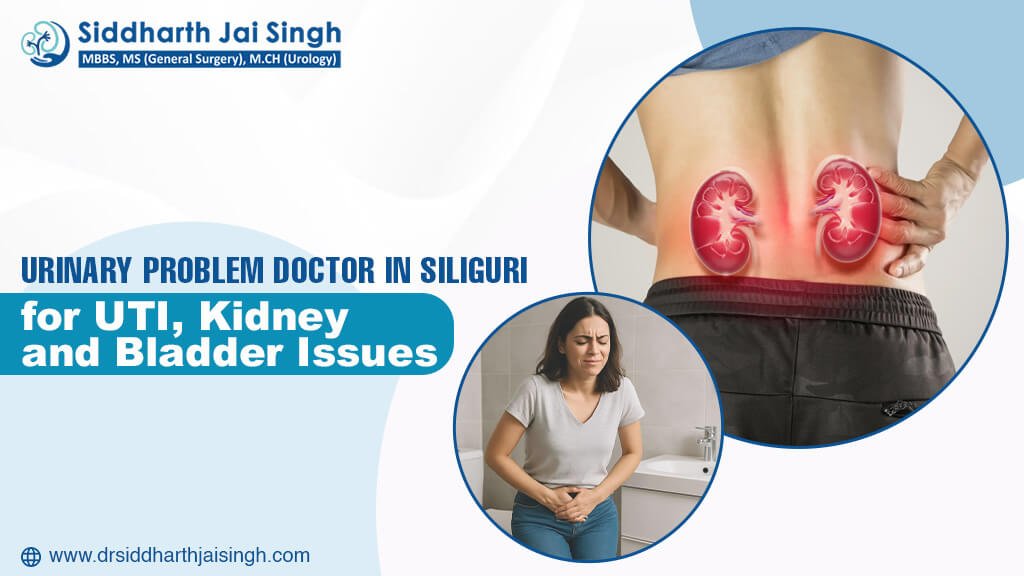
Urinary Problem Doctor in Siliguri for UTI, Kidney and Bladder Issues

Urinary Problem Doctor in Siliguri for UTI, Kidney and Bladder Issues Waking up five times at night. That burning feeling that won’t stop. Rushing to the bathroom but barely anything comes out. Sound familiar? Most people wait. hoping it passes. Drink some extra water maybe. Sometimes it works. Often it doesn’t. And waiting too long? Simple infection becomes a kidney problem. Seen it happen plenty. When Something Feels Wrong Down There The body gives signals. The problem is we ignore them. Burning while peeing—classic UTI sign. Bacteria got in somehow. It happens to women more often but men get it too. Going to the bathroom every thirty minutes—bladder irritation probably. That urgent feeling despite nothing coming out? Your system is angry about something. Blood in urine—okay this one scares people. Should scare people honestly. Could be an infection. Could be stones. Could be something needing quick attention. Don’t sit on this one. Back pain with fever—might mean kidneys got involved. Not a wait-and-see situation anymore. Finding the right urinary problem doctor in Siliguri matters when these signs show up. Why Guessing Doesn’t Work Here’s what happens when people self-treat. Read something online. Try home remedies. Maybe take leftover antibiotics from that time two years ago. Symptoms are reduced a bit. Come back worse week later. Why? Wrong antibiotic maybe. Or the right one but stopped too early. Or wasn’t even bacterial—could be something else entirely. A proper urologist in Siliguri runs actual tests. Urine samples tell which bacteria. Culture shows which antibiotic kills it. No guessing involved. Problems People Come In With UTIs—Most Common One The reason is that most people search for a urine infection doctor in Siliguri. Painful peeing. Constant bathroom trips. Cloudy urine. Strong smell. Lower belly discomfort. UTI treatment usually means antibiotics for 3-7 days. Important thing—finish the entire course even when feeling better. Kidney Stones Different kinds of pain altogether. It is a very sharp pain and it sometimes recurs . Sometimes grown men cry. Not exaggerating. Kidney stone specialists in Siliguri see lots of these. Water quality here contributes. Diet too. Small ones pass with lots of water. Bigger ones need procedures. Laser treatment runs ₹50,000 to ₹1,00,000 roughly. Bladder Issues Doctor for Bladder problem in Siliguri handles overactive bladder, chronic discomfort, infections that keep coming back despite treatment. Doctor for Frequent urination treatment in Siliguri depends on what’s causing it. Could be behavioral. Could be nerve related. Could be an infection hiding somewhere. Prostate Stuff Men over fifty especially. For Prostate problems, consult a doctor in Siliguri to address the difficulty of starting a stream. Weak flow. Feeling like the bladder never empties. A common problem. Treatable problem. But needs proper evaluation first. Leakage Problems Embarrassing topic. People avoid discussing it. Suffer silently instead. Urine leakage treatment in Siliguri helps more people than you’d think. Exercises help some. Medications help others. Procedures exist for stubborn cases. Urinary incontinence treatment in Siliguri ranges from simple to complex depending on the cause. Who Actually Needs A Specialist? Sometimes home care genuinely works. Lots of water. Rest. Mild symptoms clearing within a day or two. But certain situations need urinary specialist in Siliguri: Symptoms lasting beyond two days Fever with urinary symptoms Visible blood Severe pain in back or side Infections happening repeatedly Any UTI symptoms in men Children or elderly showing symptoms Male urinary problems require careful examination as UTIs are often less as compared to females. Some underlying issues such as prostate enlargement and kidney stones are much common among male. Female urinary problems are common due to the body structure making the infections simpler to develop. They experience repeated UTIs, burning sensation which need proper treatment and much care. What Happens at First Visit? Nothing scary honestly. The doctor asks questions first. When symptoms started. Previous episodes. Other health issues. Medications you take. Physical check follows. Looking for tenderness. Swelling. Anything unusual. Urine tests almost always. Sample goes to the lab. Results show bacteria presence, blood cells, other markers. More tests if needed. Ultrasound sometimes. Blood work occasionally. Then a treatment plan based on actual findings. No guesses. Treatment Options Simple Infections Antibiotics work well for most. Type depends on which bacteria. Duration depends on how bad things got. For Burning urination doctors in Siliguri might prescribe pain relief alongside. Phenazopyridine helps with that burning feeling while antibiotics do their job. Recurring Infections A different approach is needed here. Low-dose antibiotics for longer periods sometimes. Single dose after triggers like sexual activity. Keeping antibiotics ready for when symptoms appear. Blood in urine needs special attention. You must visit a doctor. The doctor investigates why infections keep returning. Something’s allowing bacteria in repeatedly. Stones and Other Issues Kidney and urinary doctor evaluates individually. What works for one person might not work for another. Size matters. Location matters. Overall health matters. Preventing Problems Some things actually help: Two to three liters water daily Don’t hold urine too long Bathroom before and after intimacy Wiping front to back for women Cotton underwear Avoiding harsh products near sensitive areas Simple habits. Big difference over time. Why Choose Dr. Siddharth Jai Singh for Urinary Care in Siliguri? Diagnosis First, Treatment Second- No guesswork. No repeated prescriptions. Each problem begins with a proper urine culture and test so that we can identify what is causing your illness and know the appropriate treatment needed. Total Urological Care, all in one place. No matter the problem, from minor UTIs to kidney stones, an overactive bladder, prostate issues, or incontinence, all minor and complex urology cases are managed without any referrals. Solutions to recurring problems- special about dealing with recurrent UTIs. Instead of repeated antibiotics for one infection cycle after another, we try to get to the cause and fix it. Treatment of Both Men and Women –Men have urinary issues, which may be prostate-related or caused by kidney stones, and we have specialists to assess such conditions. For women with frequent burning and infections, we offer long-term and repeated care. Honest

Urinary Problem Doctor in Siliguri for UTI, Kidney and Bladder Issues Read More »