

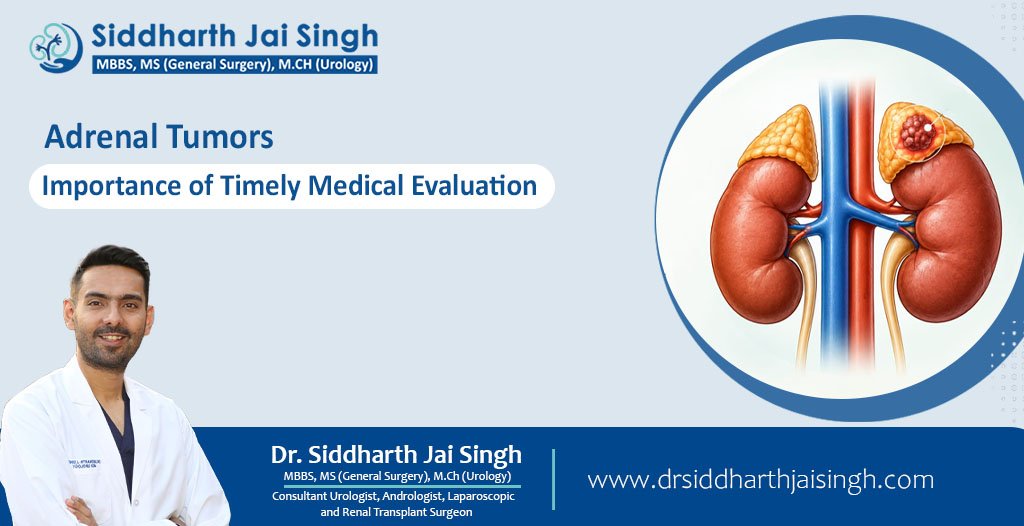
Adrenal Tumors: Importance of Timely Medical Evaluation
Adrenal Tumors are tumors that form in the adrenal glands, tiny glands located above the kidneys which produce various hormones. The majority of these tumors are non-cancerous, although some of them overproduce hormones, causing various problems or become cancerous, which makes their early detection so important.This is a comprehensive guide to adrenal tumors, including information about their causes, diagnosis, and the need for medical referrals, among other common questions from patients.
What Are Adrenal Tumors?
They are irregular masses developing either within or outside the adrenal glands. They have mainly two types:
- Functioning tumors – these are tumors that secrete hormones like cortisol, aldosterone, or adrenaline in excess
- Non-functioning tumors – these tumors do not secrete any hormone, and thus they are incidentally detected while diagnosing some other diseases
In most of the cases, these are benign tumors called adenoma, which grows very slowly. However, there are a few cases of malignancies of the adrenal gland, which are called adrenocortical carcinoma. The difference between the two is quite distinct, and thus proper classification is the key for their management.
What Causes Adrenal Tumors?
However, the precise cause has not been identified in most instances. The risk factors for the disease include the following:
- Genetic disorders such as MEN1, Von Hippel Lindau syndrome, and Li Fraumeni syndrome
- Family history of endocrine tumors
- Age, especially over 40 years
- Chronic hypertension, obesity, or smoking, all of which have been explored but whose connection has not been proven
An individual who has any known predisposition to developing an endocrine tumor or whose relative has had a history of an endocrine tumor should regularly go for screening even if there are no signs of any symptoms present at the moment.
What Are the Symptoms of Adrenal Tumors?
Symptoms vary, depending mostly on whether the mass is making hormones or not:
- Cortisol excess: gain of fat around face and stomach, skin problems (thinning), muscle weakness, psychological disturbances.
- Aldosterone excess: high blood pressure, decreased potassium, muscle cramping, fatigue.
- Adrenaline excess (pheochromocytoma): increased heart rate, intense headaches, excessive sweating, anxiety attacks.
- Non-functioning masses: may have no symptoms at all.
Since symptoms usually mimic those of stress and anxiety, people often do not suspect anything and ignore the condition. The very fact of symptoms resembling those of some everyday disorders is the reason why people need to be checked out by their doctors.
How Are Adrenal Tumors Diagnosed?
The diagnosis is generally done through the following steps:
- Medical history and physical examination
- Blood and urine tests to check the level of hormones
- CT scan, MRI, or other special nuclear scanning techniques to determine the size and location of the nodule
- Further tests to exclude cancer if required
Residents of North Bengal can visit a highly skilled Urologist at Siliguri for accurate diagnosis without having to go to a bigger city.
How Are Adrenal Tumors Treated?
The treatment strategy depends on the size of the tumor, its hormone production potential, and whether the tumor has cancerous potential:
- Small, benign, and non-functioning tumors: regular monitoring through periodic imaging and hormone studies.
- Functioning or large tumors: surgical resection, preferably by laparoscopy to speed up the healing process.
- Malignant or metastatic tumors: surgery supplemented by drugs and, in some instances, radiotherapy.
- Preoperative medication: administered to control blood pressure and hormones, particularly in case of pheochromocytomas, to prevent the development of problems during surgery.
The patients are usually steered toward the treatment modality which corresponds best to their particular diagnosis since no one treatment strategy fits all. In case of ambiguous imaging findings or equivocal hormone study results, consulting another doctor would be beneficial.
Why Is Timely Evaluation Important?
Postponing diagnosis enables the functioning cancer cells to continuously interfere with hormone levels in the body and increase the chances of having an uncontrolled hypertension, diabetes, osteoporosis, or other heart problems. In case of Malignant Adrenal Tumors, an early detection greatly enhances the probability of effective treatment because cancers located within the glands are much easier to treat compared to metastasized tumors. Timely diagnosis is also important for benign growths because some of them may grow larger or start producing hormones with time. People experiencing high blood pressure, inexplicable weight changes, or tiredness need to be diagnosed.
Life After Treatment
The majority of patients heal successfully and get back to their regular, healthy lives post treatment. Post-treatment care usually involves:
- Consistent checking of hormone levels
- Observation for recurrence of disease, particularly in case of malignancy
- Healthy lifestyle practices ensuring healthy blood pressure and overall health
- Hormone replacement therapy for lifetime, but only when both adrenals are surgically removed
There is emotional care required during the post-recovery period as well due to changes in hormone levels leading to temporary changes in moods and energy levels.
Who Is Most at Risk?
Whereas a tumor of the adrenal gland can occur in anybody, there are certain categories of people who have a relatively greater chance of developing one. Diagnosis in adults older than 40 years old occurs more frequently because of the increased incidence of imaging tests for other ailments in such individuals. Those people whose family background includes cases of endocrine cancers or genetic disorders that involve hormone-producing glands are more likely to have a tumor in their lifetime compared to other people, and thus they should be screened earlier compared to others. Persons suffering from unmanageable hypertension may be tested to check whether the root cause is a tumor that secretes hormones because normal blood pressure medicines might fail to function in such patients.
Conclusion
Adrenal Tumors are frequently overlooked because their symptoms so closely resemble everyday conditions like stress or fatigue. Recognizing the warning signs early and seeking evaluation promptly leads to better outcomes, whether the recommended plan is simple monitoring or surgical treatment. Dr. Siddharth Jai Singh, a trusted Urologist in Siliguri, encourages anyone experiencing unexplained hormonal symptoms or persistent high blood pressure to consult a specialist without delay.