
Siddhart Jai Singh (Urologist)

Dr Siddharth Jai Singh

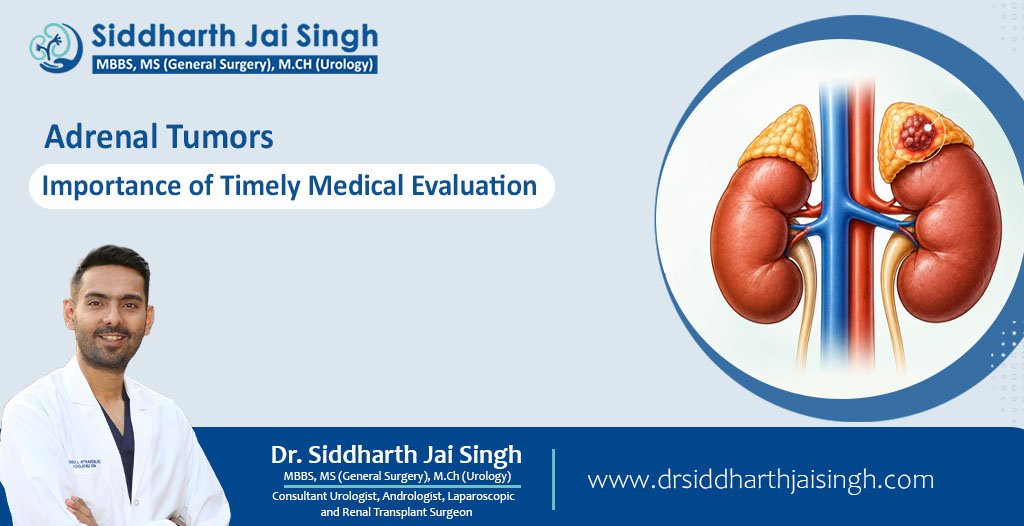
Adrenal Tumors: Importance of Timely Medical Evaluation

Adrenal Tumors: Importance of Timely Medical Evaluation Adrenal Tumors are tumors that form in the adrenal glands, tiny glands located above the kidneys which produce various hormones. The majority of these tumors are non-cancerous, although some of them overproduce hormones, causing various problems or become cancerous, which makes their early detection so important.This is a comprehensive guide to adrenal tumors, including information about their causes, diagnosis, and the need for medical referrals, among other common questions from patients. What Are Adrenal Tumors? They are irregular masses developing either within or outside the adrenal glands. They have mainly two types: Functioning tumors – these are tumors that secrete hormones like cortisol, aldosterone, or adrenaline in excess Non-functioning tumors – these tumors do not secrete any hormone, and thus they are incidentally detected while diagnosing some other diseases In most of the cases, these are benign tumors called adenoma, which grows very slowly. However, there are a few cases of malignancies of the adrenal gland, which are called adrenocortical carcinoma. The difference between the two is quite distinct, and thus proper classification is the key for their management. What Causes Adrenal Tumors? However, the precise cause has not been identified in most instances. The risk factors for the disease include the following: Genetic disorders such as MEN1, Von Hippel Lindau syndrome, and Li Fraumeni syndrome Family history of endocrine tumors Age, especially over 40 years Chronic hypertension, obesity, or smoking, all of which have been explored but whose connection has not been proven An individual who has any known predisposition to developing an endocrine tumor or whose relative has had a history of an endocrine tumor should regularly go for screening even if there are no signs of any symptoms present at the moment. What Are the Symptoms of Adrenal Tumors? Symptoms vary, depending mostly on whether the mass is making hormones or not: Cortisol excess: gain of fat around face and stomach, skin problems (thinning), muscle weakness, psychological disturbances. Aldosterone excess: high blood pressure, decreased potassium, muscle cramping, fatigue. Adrenaline excess (pheochromocytoma): increased heart rate, intense headaches, excessive sweating, anxiety attacks. Non-functioning masses: may have no symptoms at all. Since symptoms usually mimic those of stress and anxiety, people often do not suspect anything and ignore the condition. The very fact of symptoms resembling those of some everyday disorders is the reason why people need to be checked out by their doctors. How Are Adrenal Tumors Diagnosed? The diagnosis is generally done through the following steps: Medical history and physical examination Blood and urine tests to check the level of hormones CT scan, MRI, or other special nuclear scanning techniques to determine the size and location of the nodule Further tests to exclude cancer if required Residents of North Bengal can visit a highly skilled Urologist at Siliguri for accurate diagnosis without having to go to a bigger city. How Are Adrenal Tumors Treated? The treatment strategy depends on the size of the tumor, its hormone production potential, and whether the tumor has cancerous potential: Small, benign, and non-functioning tumors: regular monitoring through periodic imaging and hormone studies. Functioning or large tumors: surgical resection, preferably by laparoscopy to speed up the healing process. Malignant or metastatic tumors: surgery supplemented by drugs and, in some instances, radiotherapy. Preoperative medication: administered to control blood pressure and hormones, particularly in case of pheochromocytomas, to prevent the development of problems during surgery. The patients are usually steered toward the treatment modality which corresponds best to their particular diagnosis since no one treatment strategy fits all. In case of ambiguous imaging findings or equivocal hormone study results, consulting another doctor would be beneficial. Why Is Timely Evaluation Important? Postponing diagnosis enables the functioning cancer cells to continuously interfere with hormone levels in the body and increase the chances of having an uncontrolled hypertension, diabetes, osteoporosis, or other heart problems. In case of Malignant Adrenal Tumors, an early detection greatly enhances the probability of effective treatment because cancers located within the glands are much easier to treat compared to metastasized tumors. Timely diagnosis is also important for benign growths because some of them may grow larger or start producing hormones with time. People experiencing high blood pressure, inexplicable weight changes, or tiredness need to be diagnosed. Life After Treatment The majority of patients heal successfully and get back to their regular, healthy lives post treatment. Post-treatment care usually involves: Consistent checking of hormone levels Observation for recurrence of disease, particularly in case of malignancy Healthy lifestyle practices ensuring healthy blood pressure and overall health Hormone replacement therapy for lifetime, but only when both adrenals are surgically removed There is emotional care required during the post-recovery period as well due to changes in hormone levels leading to temporary changes in moods and energy levels. Who Is Most at Risk? Whereas a tumor of the adrenal gland can occur in anybody, there are certain categories of people who have a relatively greater chance of developing one. Diagnosis in adults older than 40 years old occurs more frequently because of the increased incidence of imaging tests for other ailments in such individuals. Those people whose family background includes cases of endocrine cancers or genetic disorders that involve hormone-producing glands are more likely to have a tumor in their lifetime compared to other people, and thus they should be screened earlier compared to others. Persons suffering from unmanageable hypertension may be tested to check whether the root cause is a tumor that secretes hormones because normal blood pressure medicines might fail to function in such patients. Conclusion Adrenal Tumors are frequently overlooked because their symptoms so closely resemble everyday conditions like stress or fatigue. Recognizing the warning signs early and seeking evaluation promptly leads to better outcomes, whether the recommended plan is simple monitoring or surgical treatment. Dr. Siddharth Jai Singh, a trusted Urologist in Siliguri, encourages anyone experiencing unexplained hormonal symptoms or persistent high blood pressure to consult a specialist without delay.

Adrenal Tumors: Importance of Timely Medical Evaluation Read More »
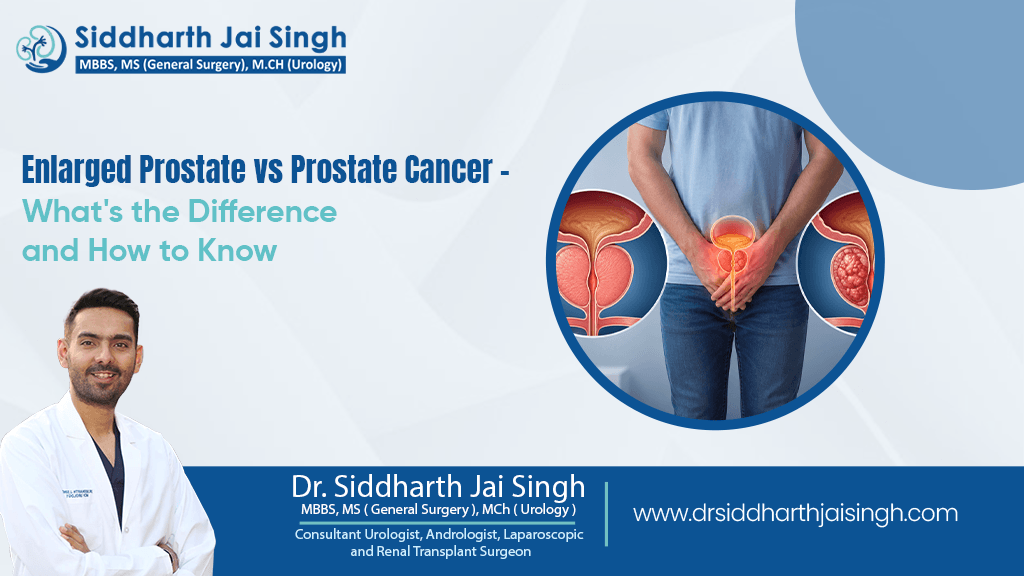
Enlarged Prostate vs Prostate Cancer -What’s the Difference and How to Know

Enlarged Prostate vs Prostate Cancer -What’s the Difference and How to Know Getting up three times a night to pee is annoying. It’s also incredibly common. Most men just laugh it off and blame age. But somewhere in the back of their mind, a small worry sits there too. Is this just aging? Or is it something more serious?   This is where the enlarged prostate vs prostate cancer question comes up. Both conditions affect the same gland. Both cause similar symptoms. Both show up more often as men get older. But they are not the same thing, and knowing the difference can save you a lot of unnecessary worry.   Let’s break it down simply, without the medical jargon. What Is an Enlarged Prostate? The prostate is a small gland, roughly the size of a walnut. It sits below the bladder in men, wrapped around the tube that carries urine out of the body. As men age, this gland often grows larger, sometimes quite a bit larger. Doctors call this benign prostatic hyperplasia, or BPH.   BPH is not cancer. It’s just growth, the kind of thing that happens naturally with age, a bit like graying hair. But that growth can press on the urethra. And that pressure is what causes the annoying trips to the bathroom.   Most men over 50 have some degree of this. It’s incredibly common, almost a normal part of getting older. It’s also usually harmless, just uncomfortable and, honestly, a little inconvenient. What Is Prostate Cancer? Prostate cancer is otherwise, and a bit scarier to hear about. This occurs when cells within the prostate begin to grow in an abnormal manner and multiply in a manner that is unacceptable. If the cells are not treated, they may develop outside of the prostate and can sometimes invade nearby bones or organs.   While BPH is not life-threatening, prostate cancer can be. Fortunately, it is frequently very treatable if it is caught early. Many men live long healthy lives after diagnosis, and possibly without any change in their everyday life.   That’s why the big difference between the two is important: enlarged prostate versus prostate cancer. One is an annoyance that you have to deal with. The other requires immediate and targeted attention. Where the Symptoms Overlap Both conditions can cause:   Frequent urination, especially at night A weak or interrupted urine stream Difficulty starting urination A feeling that the bladder isn’t fully empty Straining while urinating Because these symptoms are so similar, it’s genuinely difficult to tell the two apart without a proper medical evaluation. This is one of the biggest reasons men shouldn’t try to self-diagnose based on symptoms alone. Signs That Point More Toward Prostate Cancer Whereas no list of symptoms is ever going to substitute for a proper diagnosis, there are certain symptoms which seem to occur more frequently with prostate cancer than with benign prostatic hyperplasia:   The presence of blood in the urine or semen Persistent pain in the lower back, hips, or pelvis Unexplained weight loss Pain during ejaculation Sudden development of erectile dysfunction Where any of these symptoms manifest themselves in addition to the symptoms associated with BPH, medical consultation should definitely be sought immediately. How Doctors Tell the Two Apart As symptoms alone are not sufficient to make an accurate diagnosis, several tests are conducted in order to determine the cause of the problem:   Digital Rectal Examination (DRE): Involves a physical examination of the prostate. Enlarged and smooth prostate may indicate BPH, while lumps and hard spots are associated with prostate cancer.   PSA Blood Test: The PSA test measures the amount of Prostate Specific Antigen (a protein secreted by the prostate) in the blood. High levels of PSA indicate either BPH or prostate cancer, which means that this test alone cannot diagnose cancer – it merely requires further investigation.   Ultrasound/MRI Tests: These tests provide additional information about the prostate’s structure and its size.   Biopsy: If a suspicion of cancer arises after these above tests, then there is no other way except for biopsy to ascertain that. This test involves examination under a microscope of a small piece of tissue taken from the prostate to see if cancer cells exist.   None of these tests should be a reason for panic because it is just a normal procedure used to find out the truth. Why Early Evaluation Matters The primary danger with prostate conditions does not lie with the actual diagnosis; it lies in the delay in dealing with the symptoms. Untreated BPH may lead to problems such as urinary retention, bladder stones, or kidney failure. Early detection of prostate cancer gives a wide array of treatment options, while the opposite makes them extremely limited.   Men tend to ignore their health because of fear, making an automatic assumption that their condition is prostate cancer without even consulting a doctor. However, in most cases, symptoms related to the prostate do not mean cancer; most likely, the man suffers from BPH. When Should You See a Doctor? You should schedule a consultation if you notice: Consistent changes in your urination pattern lasting several weeks Presence of blood in your urine and semen Constant discomfort in the pelvis, lower back or hips Family history of prostate cancer along with presence of any symptoms Age 50 or above without having your prostate checked yet Prostate screening is particularly important for men over 50 or over 45 in case of a family history of prostate cancer, as early stages of this disease have no symptoms at all. A Word From Dr. Siddharth Jai Singh “For most males, the mention of the word ‘prostate’ means anticipating the worst, but the fact is, enlarged prostate gland is far more prevalent than prostate cancer and is quite manageable too once one gets it evaluated. It is the delay in getting oneself evaluated due to apprehension that is the real risk. A simple evaluation will do the trick and will

Enlarged Prostate vs Prostate Cancer -What’s the Difference and How to Know Read More »

Laparoscopic Surgeon in Siliguri Providing Complete Pre- and Post-Surgical Care

While you are searching for any surgical treatments, patients not only seek medical expertise but a complete palliative care which stretches beyond the waiting room. Dr Siddharth Jai Singh has built himself as a trusted laparoscopic surgeon in Siliguri by providing advanced minimally invasive ways in addition to exhaustive pre and post surgical support. His manner amalgamates precision, improvised technology and a holistic approach, making him one of the most desirable laparoscopic surgeons in Siliguri. Benefits of Laparoscopic Surgery Laparoscopic surgery is often regarded as a minimally invasive surgery which is executed to operate either in the abdomen or the pelvis through small incisions. Laparoscopy is a special instrument with a camera which is used by surgeons with little pain, lessening bleeding and fast recovery as compared to traditional open surgery. Less pain and discomfort Quick recovery time Minimal scar Short hospital stay Why opt for Dr Siddharth Jai Singh? Dr Singh is acknowledged as one of the brilliant laparoscopic surgeons in Siliguri for his expert hands in tackling 6th complex cases with much care and precision. His reputation survives on various pillars such as Advanced laparoscopic surgery: specialisation: He is involved in a wide variety of minimally invasive surgery, gastrointestinal and general surgery. Patient-first philosophy: Each patient will be given a personal approach, both during diagnosis and after recovery. High-tech equipment: The modern laparoscopic instruments are used, which guarantee precision and safety. Comprehensive care: In addition to surgery, Dr Singh will focus on lifestyle education, nutrition, and follow-up care. Complete Pre-Surgical Care Surgery preparation is as significant as the surgery. Dr Singh does this by making sure that patients are well-informed and physically prepared by: Consultations in detail: The explanation of the condition, treatment, and surgery Diagnostic assessments: Full fitness to surgery tests Counselling sessions: Take care of the patient’s concerns, alleviate anxiety, and develop confidence Individualised nutritional plans: Dietary modifications, drug therapy, and lifestyle changes Post-Surgical Surgery and Recovery The recovery does not stop when the operation is completed. The work of a doctor like Dr Singh is not over, as his work is associated with patient well-being by means of organised post-operative treatment: Close follow-up: Frequent follow-ups to monitor the progress of healing and identify complications at first Pain management: Making sure that the patient is comfortable and not much is done using heavy medications Eating advice: Individual meal plans to help the recovery process and avoid a repetition of the problems Rehabilitation support: Promotion of the slow resumption of daily activities and exercise Emotional comfort: It involves assisting patients in gaining confidence and tranquillity post-surgery Advantages of Selecting Minimally Invasive Surgery in Siliguri If you want to search for a Laparoscopic Surgeon in Siliguri, you should opt for Dr Singh. The various advantages of invasive surgery are:   Accessibility: There is no necessity to travel to metro cities to obtain advanced surgical care Affordability: Quality treatment at affordable prices in comparison with larger hospitals Community trust: More and more patients refer Dr Singh to their clients due to his professionalism and outcomes Reduced time to normal life: Reduced recovery times imply patients can get back to work and family life at a very short time Patient Centred Care Dr Siddharth  Jai Singh’s expertise is based on the belief that surgery should not only treat the condition of the patient but also enhance the overall quality of the patient.  His dual approach to the advanced laparoscopic surgery and supportive care, which the patients must obtain. So he is regarded as one of the most trusted laparoscopic surgeons in Siliguri. Medical excellence: Accurate surgical results. Human relationship: Sympathy, communication, and support during the process. Long-term wellness: Pre-discharge care. Frequently Asked Questions (FAQs) What are the kinds of surgeries that he carries out? Dr. Singh carries out a broad spectrum of laparoscopic surgery in Siliguri and these include: ● gallbladder (cholecystectomy). ● Hernia repair ● Appendectomy ● Weight-loss surgery Bariatric surgery ● Gastrointestinal procedures What are the benefits of laparoscopy surgery as opposed to traditional surgery? The laparoscopic surgery has several advantages: ● Fewer scars and smaller incisions ● Reduced pain and discomfort ● Fast recovery and reduced hospitalisation ● Lower risk of infection That is why it is the most favoured among the patients who want to receive the least invasive surgery in Siliguri. What is associated with pre-surgical care? Pre-surgical care involves: ● Consultations and counselling in details ● Fitness for Surgery Diagnostic Tests ● Diet instructions, medication ● Recommendations in Lifestyle Conclusion Dr. Siddharth Jai Singh is a reliable name to any person seeking the services of a laparoscopic surgeon in Siliguri. He is a safe and caring doctor because of his knowledge in minimally invasive procedures, and his commitment to offering full pre- and post-surgery care to the patients. His holistic approach also makes sure that patients not only recover, but also prosper, whether it is routine procedures or even complex surgeries.

Laparoscopic Surgeon in Siliguri Providing Complete Pre- and Post-Surgical Care Read More »