Siddhart Jai Singh (Urologist)

Urologist in Siliguri

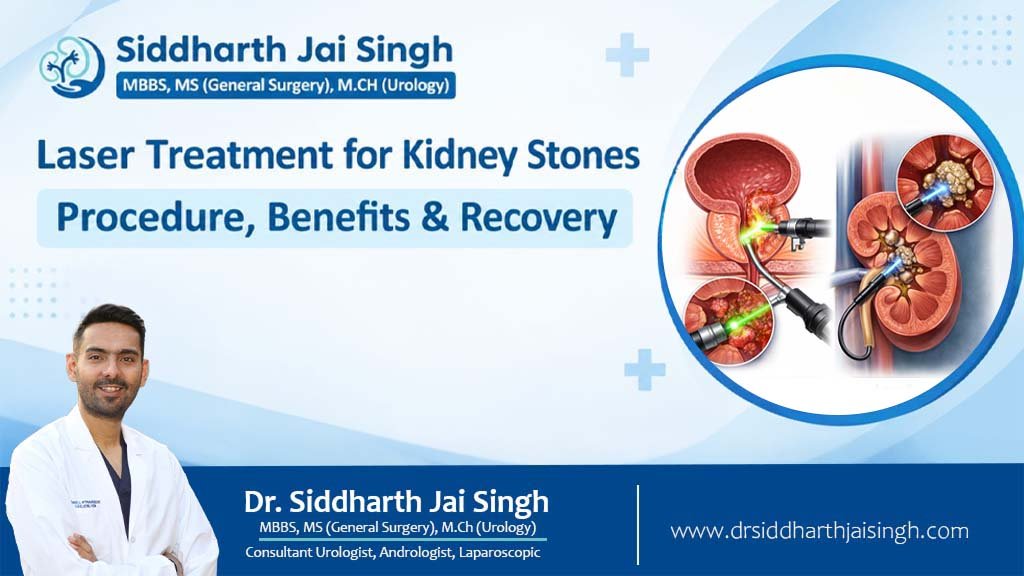
Laser Treatment for Kidney Stones: Procedure, Benefits & Recovery

Laser Treatment for Kidney Stones: Procedure, Benefits & Recovery Pain, difficulty urinating, hematuria, nausea, and vomiting may occur due to kidney stones. While kidney stones may sometimes pass naturally, there are situations where surgery is required to remove the stones. Laser kidney stone treatment is one of the common techniques for the removal of kidney stones, typically done by ureteroscopy procedure.   Laser stone treatment technique enables a urologist to find and pulverize the kidney stone into pieces of dust or small fragments that are easily removable through urination. The technique does not involve making any cuts externally and depends upon the size and location of the stone.   If you want to understand kidney stones in more detail, you can also read this guide on kidney stone symptoms, causes and treatment. What Is Laser Treatment for Kidney Stones? Laser therapy for kidney stones is a minimally invasive process that helps break up or remove stones from the urinary tract. Laser stone therapy is usually done when there is ureteroscopy and laser lithotripsy.   In this case, a thin ureteroscope is inserted through the natural urinary tract into the bladder and then into the ureter or kidney. Once the stone is identified, a tiny laser fiber is used to fragment the stone.   Based on the nature of the stone, the fragments can either be: Removed by a tiny basket Fragmented into extremely small fragments, often referred to as “dusting” Permitted to exit via the urine Since there is no incision made externally due to the use of the natural urinary tract, ureteroscopy can be done for stones in the ureter and selected kidney stones. When Is Laser Kidney Stone Treatment Recommended? It is not all cases of kidney stones that require laser therapy. Some smaller stones may be passed naturally through medical observation.   Some situations that may prompt a urologist to suggest laser therapy include: When the stone cannot be passed naturally The stone causes continuous pain The stone blocks the passing of urine The stone causes recurrent problems with urination The presence of complications because of the stone The stone is in a situation in which ureteroscopy can be applied The unsuccessful application of some other procedure This will depend on various considerations. For a broader overview of treatment options, see the kidney stone treatment guide. How Does Laser Treatment for Kidney Stones Work? 1. Pre-procedure evaluation Before treatment, the urologist evaluates the stone and your overall health. Depending on the case, this may involve urine and blood tests along with imaging such as an ultrasound, X-ray or CT scan.   Imaging helps determine the stone’s size and location and assists the urologist in choosing an appropriate treatment approach. 2. Anaesthesia Ureteroscopy with laser lithotripsy is generally performed under anaesthesia so the patient remains comfortable during the procedure. The exact anaesthesia plan depends on the procedure and individual circumstances. 3. Ureteroscope is inserted The urologist carefully passes a thin telescope through the urethra into the bladder and then towards the ureter or kidney.   This allows the stone to be directly visualised without making an incision through the skin. 4. The stone is treated with a laser Once the stone is identified, a fine laser fibre is used to break it into smaller pieces.   For suitable stones, the laser may be used to dust the stone into very small fragments. Larger fragments may instead be removed using a small retrieval basket. 5. A temporary stent may be placed In some cases, the urologist may place a temporary ureteric stent after the procedure. A stent helps maintain urine drainage while the ureter heals.   Not every patient necessarily requires a stent, and its use depends on the circumstances of the procedure. Benefits of Laser Treatment for Kidney Stones Laser treatment has become an important option for managing many ureter and kidney stones because it combines direct stone access with minimally invasive treatment. Minimally invasive approach The procedure is performed through the natural urinary passage rather than through an external incision. This can reduce the need for conventional open surgery. Effective stone fragmentation The laser can break stones into smaller pieces or dust, making it possible to remove or pass the fragments. Direct visualisation Unlike treatments that rely only on external targeting, ureteroscopy allows the urologist to directly see the stone and treat it. Suitable for different stone locations Flexible ureteroscopes can allow treatment of stones located in parts of the kidney that may be difficult to access through other approaches. Short recovery for many patients Many patients can return home on the same day or after a short period of observation, depending on the procedure and their overall condition. Normal activities may often resume within a few days, although individual recovery varies. Laser Treatment vs Other Kidney Stone Treatments Laser treatment is not the only form of treatment available for kidney stones. The urologist would have to choose other methods such as observation, medicines, ESWL, or surgery depending upon the condition of the patient.   The ESWL involves the use of external shock waves for breaking down the stones into tiny fragments that are able to come out along with urine. This is not similar to laser lithotripsy where the treatment takes place from inside using the ureteroscope.   For bigger or more difficult to treat kidney stones, another form of treatment like PCNL would be recommended.   Thus, there is no single best treatment for all patients. There are many factors that need to be considered before choosing the treatment method. Recovery After Laser Kidney Stone Treatment Recovery after ureteroscopy and laser lithotripsy is usually relatively quick, but some temporary symptoms can occur.   You may experience: Mild burning while urinating Increased urinary frequency or urgency Mild discomfort Blood in the urine for a short period Discomfort related to a temporary ureteric stent These symptoms generally improve as the urinary tract heals. If a stent has been inserted, discomfort may continue until it is removed.

Laser Treatment for Kidney Stones: Procedure, Benefits & Recovery Read More »

10 Home Remedies for UTI: Natural Ways to Manage Symptoms

10 Home Remedies for UTI: Natural Ways to Manage Symptoms Discomfort while urinating, frequent urge to urinate or a sudden urge to urinate could be quite discomforting. These are some symptoms of a urinary tract infection (UTI), especially if the infection has infected your bladder.   Home remedies for UTIs are some easy ways to reduce your discomfort and maintain urinary tract health. Nevertheless, it is crucial to remember that although you can treat yourself at home, that does not mean that you will be able to cure a bacterial UTI by doing so.   In case of infections caused by bacteria, it is possible that you may need professional help and prescribed medication.   Here are 10 ways of dealing with UTI symptoms. What Is a UTI? UTI is a disease caused by the penetration of bacteria into the parts of the urinary tract where they start multiplying.   Symptoms of UTI include:   Painful or burning sensation during urination Frequent urination Intense need to urinate Release of little amount of urine Lower abdominal pain Cloudy urine or smell coming from urine Presence of blood in the urine If you experience fever, chills, nausea, vomiting or pain in the back or side, it might mean that the infection has spread to the kidneys. 10 Home Remedies for UTI 1. Drink Enough Water Hydration is the easiest method of ensuring urinary tract health.   Water consumption is necessary in order to help keep your urine production going and also may help increase visits to the toilet. That might be helpful if you have some urinary problems.   But consuming an excessive amount of water won’t help treat an existing infection.   Advice: It is better to consume water throughout the day rather than try to consume much water at once. 2. Don’t Hold Your Urine Whenever you have the urge to urinate, don’t delay it without necessity.   Urine retention is harmful to your body; thus, it can be useful for those individuals who are often neglectful of their urge to urinate.   However, you shouldn’t make yourself urinate all the time since the main objective here is to keep from retaining urine on a regular basis. 3. Use a Warm Compress for Discomfort Placing a heating pad or hot water bottle over the abdomen could help ease the discomfort in the bladder area.   The heat must not be too much; an extremely hot object must not be used on the skin.   This is only a symptom management technique and not a way to treat the infection. 4. Avoid Drinks That Irritate Your Bladder If you have an already irritated bladder, certain beverages can make symptoms worse.   You might want to cut back on:   Coffee Concentrated teas Alcoholic drinks Energy drinks Carbonated drinks Any other beverages that make your symptoms worse Water tends to be the easiest way to stay hydrated. 5. Keep the Genital Area Clean Without Over-Cleansing Personal hygiene is helpful in maintaining urinary system health, although too much cleaning may lead to irritation.   Avoid overusing:   Intimate body washes with fragrance Douching agents Strong soaps Fragranced sprays In ladies, cleaning from front to back after visiting the bathroom is a routine practice to prevent bacteria transfer near the urethra. 6. Wear Loose, Breathable Clothing The use of tight clothing increases moisture and irritation in the genital area. Wearing loose clothing and undergarments will aid in keeping the area dry.   However, this doesn’t solve the problem of UTI, but it is one of the good practices in urinary and genital hygiene. 7. Consider Cranberry for Recurrent UTI Prevention – Not Treatment Cranberry is among the most frequently cited natural methods for maintaining urinary tract health.   There are some studies which show that cranberry might potentially lower the chances of developing recurrent UTIs. However, using cranberry juice or cranberry supplements cannot be viewed as a viable method to cure an existing UTI.   Specifically, consuming cranberry juice cannot cause a delay in seeking proper treatment when one experiences serious problems in his/her urinary tract. According to Nebraska Medicine, cranberry cannot be compared to other treatments supported by more convincing evidence since it does not treat a current bladder infection.   When you consider using cranberry supplements, consult your physician especially if you use medication on a regular basis or have another illness. 8. Get Adequate Rest Feeling sick can affect your ability to keep up with your usual schedule.   Sleeping enough and giving your body some time to heal can help with overall health while you are having problems with urination.   However, note that resting cannot kill the bacteria causing the UTI.   If the problem persists or gets worse, do not continue using home remedies only. 9. Avoid Unproven “Quick Cures” The internet is replete with claims about natural ways to treat UTIs, which include herbal juices, vitamin and mineral supplementation and other household ingredients.   The issue with this is that when something is termed “natural” does not always translate into efficacy and appropriateness for everyone.   For instance, the effectiveness of certain UTI treatments is still not fully established. D-mannose and probiotic supplements are not automatically alternatives to proven treatments.   Do not attempt to use irritating and supplementary products because they are marketed as a natural antibiotic. 10. Monitor Your Symptoms Closely The most crucial step in the process of home care might be recognizing the moment when the issue should no longer be treated at home and requires professional help.   Consider the following criteria: Duration of the symptoms Their improvement or aggravation The reappearance of the symptoms after treatment Development of fever or chills Appearance of back or lateral pain Presence of blood in the urine In case any of these symptoms continue, come back, or get aggravated, seek medical assistance. What Not to Do When You Have a UTI Don’t take leftover antibiotics – Use only antibiotics prescribed for your current infection.

10 Home Remedies for UTI: Natural Ways to Manage Symptoms Read More »

Adrenal Tumors: Importance of Timely Medical Evaluation

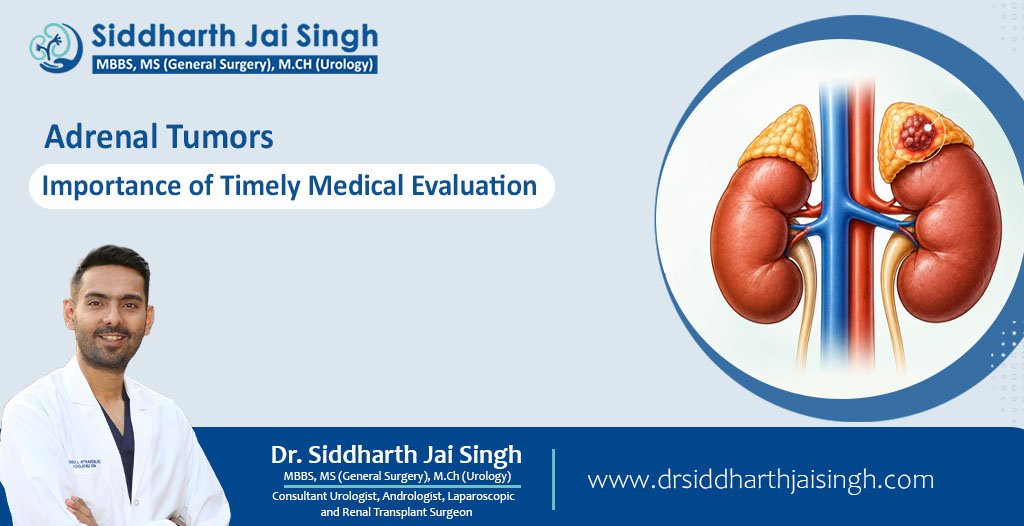
Adrenal Tumors: Importance of Timely Medical Evaluation Adrenal Tumors are tumors that form in the adrenal glands, tiny glands located above the kidneys which produce various hormones. The majority of these tumors are non-cancerous, although some of them overproduce hormones, causing various problems or become cancerous, which makes their early detection so important.This is a comprehensive guide to adrenal tumors, including information about their causes, diagnosis, and the need for medical referrals, among other common questions from patients. What Are Adrenal Tumors? They are irregular masses developing either within or outside the adrenal glands. They have mainly two types: Functioning tumors – these are tumors that secrete hormones like cortisol, aldosterone, or adrenaline in excess Non-functioning tumors – these tumors do not secrete any hormone, and thus they are incidentally detected while diagnosing some other diseases In most of the cases, these are benign tumors called adenoma, which grows very slowly. However, there are a few cases of malignancies of the adrenal gland, which are called adrenocortical carcinoma. The difference between the two is quite distinct, and thus proper classification is the key for their management. What Causes Adrenal Tumors? However, the precise cause has not been identified in most instances. The risk factors for the disease include the following: Genetic disorders such as MEN1, Von Hippel Lindau syndrome, and Li Fraumeni syndrome Family history of endocrine tumors Age, especially over 40 years Chronic hypertension, obesity, or smoking, all of which have been explored but whose connection has not been proven An individual who has any known predisposition to developing an endocrine tumor or whose relative has had a history of an endocrine tumor should regularly go for screening even if there are no signs of any symptoms present at the moment. What Are the Symptoms of Adrenal Tumors? Symptoms vary, depending mostly on whether the mass is making hormones or not: Cortisol excess: gain of fat around face and stomach, skin problems (thinning), muscle weakness, psychological disturbances. Aldosterone excess: high blood pressure, decreased potassium, muscle cramping, fatigue. Adrenaline excess (pheochromocytoma): increased heart rate, intense headaches, excessive sweating, anxiety attacks. Non-functioning masses: may have no symptoms at all. Since symptoms usually mimic those of stress and anxiety, people often do not suspect anything and ignore the condition. The very fact of symptoms resembling those of some everyday disorders is the reason why people need to be checked out by their doctors. How Are Adrenal Tumors Diagnosed? The diagnosis is generally done through the following steps: Medical history and physical examination Blood and urine tests to check the level of hormones CT scan, MRI, or other special nuclear scanning techniques to determine the size and location of the nodule Further tests to exclude cancer if required Residents of North Bengal can visit a highly skilled Urologist at Siliguri for accurate diagnosis without having to go to a bigger city. How Are Adrenal Tumors Treated? The treatment strategy depends on the size of the tumor, its hormone production potential, and whether the tumor has cancerous potential: Small, benign, and non-functioning tumors: regular monitoring through periodic imaging and hormone studies. Functioning or large tumors: surgical resection, preferably by laparoscopy to speed up the healing process. Malignant or metastatic tumors: surgery supplemented by drugs and, in some instances, radiotherapy. Preoperative medication: administered to control blood pressure and hormones, particularly in case of pheochromocytomas, to prevent the development of problems during surgery. The patients are usually steered toward the treatment modality which corresponds best to their particular diagnosis since no one treatment strategy fits all. In case of ambiguous imaging findings or equivocal hormone study results, consulting another doctor would be beneficial. Why Is Timely Evaluation Important? Postponing diagnosis enables the functioning cancer cells to continuously interfere with hormone levels in the body and increase the chances of having an uncontrolled hypertension, diabetes, osteoporosis, or other heart problems. In case of Malignant Adrenal Tumors, an early detection greatly enhances the probability of effective treatment because cancers located within the glands are much easier to treat compared to metastasized tumors. Timely diagnosis is also important for benign growths because some of them may grow larger or start producing hormones with time. People experiencing high blood pressure, inexplicable weight changes, or tiredness need to be diagnosed. Life After Treatment The majority of patients heal successfully and get back to their regular, healthy lives post treatment. Post-treatment care usually involves: Consistent checking of hormone levels Observation for recurrence of disease, particularly in case of malignancy Healthy lifestyle practices ensuring healthy blood pressure and overall health Hormone replacement therapy for lifetime, but only when both adrenals are surgically removed There is emotional care required during the post-recovery period as well due to changes in hormone levels leading to temporary changes in moods and energy levels. Who Is Most at Risk? Whereas a tumor of the adrenal gland can occur in anybody, there are certain categories of people who have a relatively greater chance of developing one. Diagnosis in adults older than 40 years old occurs more frequently because of the increased incidence of imaging tests for other ailments in such individuals. Those people whose family background includes cases of endocrine cancers or genetic disorders that involve hormone-producing glands are more likely to have a tumor in their lifetime compared to other people, and thus they should be screened earlier compared to others. Persons suffering from unmanageable hypertension may be tested to check whether the root cause is a tumor that secretes hormones because normal blood pressure medicines might fail to function in such patients. Conclusion Adrenal Tumors are frequently overlooked because their symptoms so closely resemble everyday conditions like stress or fatigue. Recognizing the warning signs early and seeking evaluation promptly leads to better outcomes, whether the recommended plan is simple monitoring or surgical treatment. Dr. Siddharth Jai Singh, a trusted Urologist in Siliguri, encourages anyone experiencing unexplained hormonal symptoms or persistent high blood pressure to consult a specialist without delay.

Adrenal Tumors: Importance of Timely Medical Evaluation Read More »

Kidney Stone Diet for Faster Recovery and Better Kidney Health

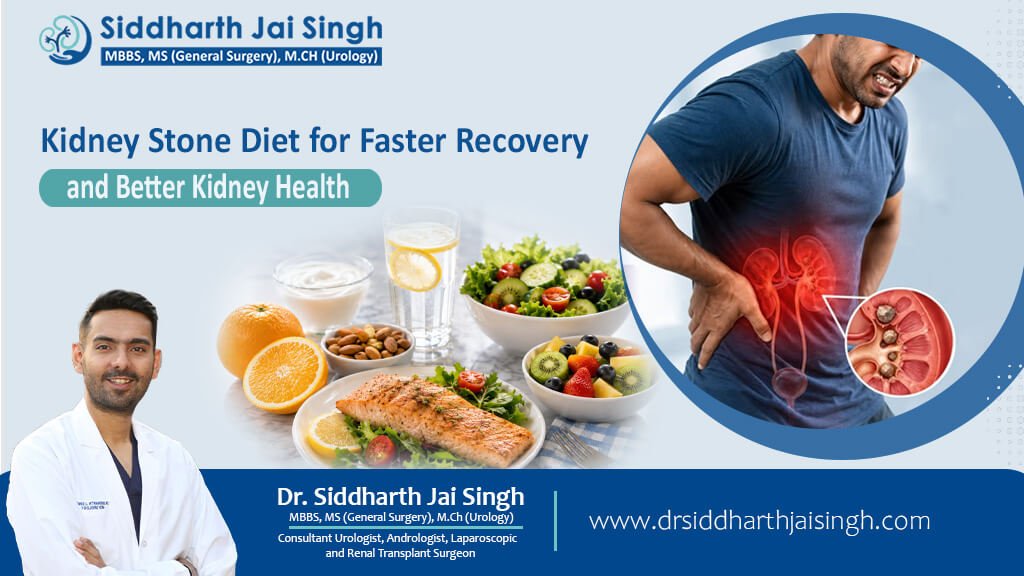
Kidney Stone Diet for Faster Recovery and Better Kidney Health Getting rid of kidney stones is an extremely painful experience and if you have had one kidney stone attack, you undoubtedly do not want to go through it again. Unfortunately, kidney stone formation tends to have a very high recurrence rate with most patients suffering from the problem once again over five to ten years. While the bad news is that kidney stones are recurrent and painful, there is some good news as well: diet is found to play a major role in determining whether you will get another kidney stone or not. A well-designed kidney stone diet can enhance the treatment effectiveness and lower the risk of kidney stone formation. In this article, we will explain what foods to eat, what to avoid, how to create a correct kidney stone diet plan, and how to maintain it for a prolonged period of time. Understanding Kidney Stones Before You Fix Your Diet Kidney stones are solid masses that develop, when minerals and salts within urine solidify instead of flowing outside naturally. Not all kidney stones are alike, so it is necessary to adjust your diet according to the type of a kidney stone you have. The most common types of kidney stones are as follows:   Calcium oxalate stones – the most abundant type that develops when oxalate combines with calcium; Calcium phosphate stones – often caused by pH imbalance; Uric acid stones – associated with high consumption of products containing purines; Struvite and cystine stones – two types that are rare and usually appear due to diseases or hereditary problems. The preliminary stage is to have a stone analysis and urinalysis performed before making diet changes. Why Diet Matters So Much in Kidney Stone Recovery Every day, your kidneys remove waste products and excess minerals from your bloodstream. If your diet contains a lot of sodium, animal protein, sugar, or oxalate foods, you may end up with urine rich in stones. This condition increases the chances for new crystals to appear. Proper kidney stone recovery diet works as follows:   Dilutes the urine to prevent minerals from crystallizing. Balances the intake of calcium and oxalate to enable binding in the gut. Reduces the intake of sodium and animal protein that results in increased calcium excretion. Maintains appropriate pH in the urine depending on the type of kidney stone you have. Hydration: The Single Most Important Habit Without a doubt, water is the most critical element in any kidney stone diet. Drinking enough water is not only one of the easiest ways to stop the creation of kidney stones but also the most effective way to ensure that your urine is able to dilute minerals and prevent clumping of such minerals.   Practical tips: Try to drink at least 2.5 to three liters of liquid a day or more if you sweat or exercise often. Your urine should be pale yellow. Dark urine is a sign that something is wrong. Use fresh lemon water, as lemon juice helps discourage the formation of kidney stones. Limit soft drinks, bottled juices, and excessive consumption of tea and coffee; do this especially while recovering. Foods to Eat for Better Kidney Health 1. Foods High in Calcium Some people choose to remove all calcium from their diets after discovering they have kidney stones; however, this will rarely help. Calcium present in food such as milk, yogurt, and low-fat dairy products binds with oxalic acid in the digestive system before reaching the kidneys, thus reducing the risk of stone formation. 2. Different Types of Citrus Fruits Citrus fruits such as lemons, limes, and oranges are a natural source of citrate, which prevents calcium from binding in the kidneys with oxalic acid and uric acid. 3. Vegetables and Fruits Including plenty of fruits and vegetables in one’s diet helps maintain a balanced urinary pH and provides the necessary amount of fiber, potassium, and antioxidants for good kidney health. 4. Plant-based proteins Replacing some of your red meat and chicken with lentils, beans, or chickpeas can help lessen the burden on your kidneys and decrease your uric acid production which is advantageous if you are prone to uric acid stones. 5. Whole grains Whole grains are good for digestion and metabolism, which makes them a perfect substitute for refined carbohydrates found in processed foods that are high in sodium. Foods and Habits to Limit or Avoid 1. Foods with High Oxalates Things such as beet, chocolate, spinach, and many types of nuts have high oxalate content. When avoiding calcium oxalate stones, completely cutting them out is not necessary; rather, controlling the amount of such foods means that they can still be consumed, combined with calcium while eating. 2. Excess Salt Intake Excess sodium means that more calcium is being eliminated through urine by kidneys; thus stones can be formed. One should also be especially cautious of hidden salt in packaged and prepared food. 3. High Levels of Animal Protein Heavy consumption of red meat, seafood, and organ meat results in a rise of excreting uric acid from the body and calcium stones. Very often moderation is enough to deal with this issue, instead of cutting these foods out completely. 4. Sweet Foods and Sweets People who consume a lot of sugary foods are at a higher risk of getting stones. 5. Alcohol and Caffeine Both cause dehydration and might contradict the essence of a kidney stone diet. A Sample Day on a Kidney-Friendly Diet Morning: A glass of warm water with lemon juice and a bowl of oats topped with fruits Mid-morning: A glass of plain buttermilk or low-fat yogurt Lunch: Dal, vegetable curry, whole wheat roti or rice, and a small bowl of plain yogurt Evening: Another serving of fresh fruits or a handful of soaked almonds Dinner: Grilled fish or lentils with steamed vegetables During the day: Drink water often and not just when you feel thirsty. This is a broad plan for everybody

Kidney Stone Diet for Faster Recovery and Better Kidney Health Read More »

Enlarged Prostate vs Prostate Cancer -What’s the Difference and How to Know

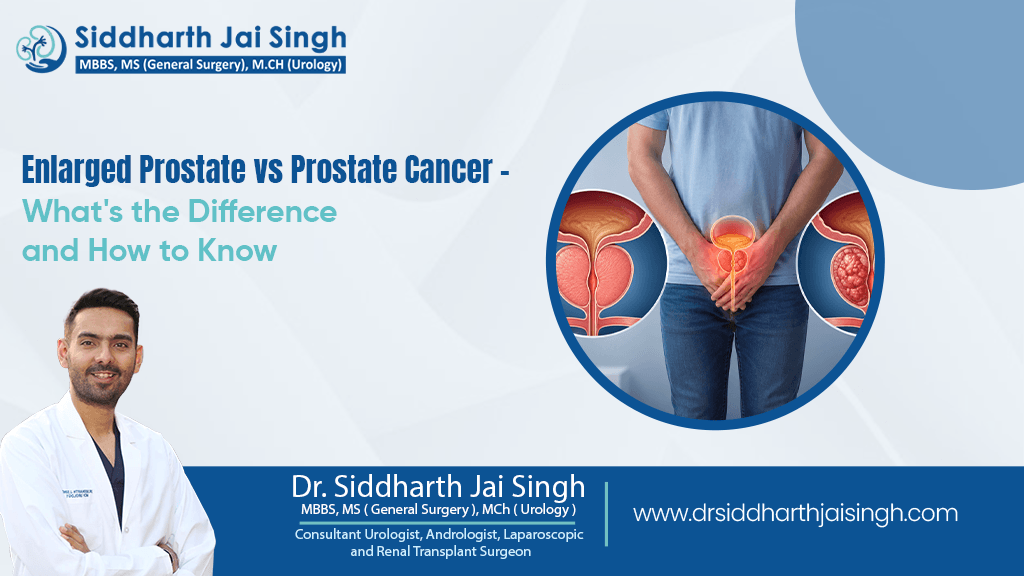
Enlarged Prostate vs Prostate Cancer -What’s the Difference and How to Know Getting up three times a night to pee is annoying. It’s also incredibly common. Most men just laugh it off and blame age. But somewhere in the back of their mind, a small worry sits there too. Is this just aging? Or is it something more serious?   This is where the enlarged prostate vs prostate cancer question comes up. Both conditions affect the same gland. Both cause similar symptoms. Both show up more often as men get older. But they are not the same thing, and knowing the difference can save you a lot of unnecessary worry.   Let’s break it down simply, without the medical jargon. What Is an Enlarged Prostate? The prostate is a small gland, roughly the size of a walnut. It sits below the bladder in men, wrapped around the tube that carries urine out of the body. As men age, this gland often grows larger, sometimes quite a bit larger. Doctors call this benign prostatic hyperplasia, or BPH.   BPH is not cancer. It’s just growth, the kind of thing that happens naturally with age, a bit like graying hair. But that growth can press on the urethra. And that pressure is what causes the annoying trips to the bathroom.   Most men over 50 have some degree of this. It’s incredibly common, almost a normal part of getting older. It’s also usually harmless, just uncomfortable and, honestly, a little inconvenient. What Is Prostate Cancer? Prostate cancer is otherwise, and a bit scarier to hear about. This occurs when cells within the prostate begin to grow in an abnormal manner and multiply in a manner that is unacceptable. If the cells are not treated, they may develop outside of the prostate and can sometimes invade nearby bones or organs.   While BPH is not life-threatening, prostate cancer can be. Fortunately, it is frequently very treatable if it is caught early. Many men live long healthy lives after diagnosis, and possibly without any change in their everyday life.   That’s why the big difference between the two is important: enlarged prostate versus prostate cancer. One is an annoyance that you have to deal with. The other requires immediate and targeted attention. Where the Symptoms Overlap Both conditions can cause:   Frequent urination, especially at night A weak or interrupted urine stream Difficulty starting urination A feeling that the bladder isn’t fully empty Straining while urinating Because these symptoms are so similar, it’s genuinely difficult to tell the two apart without a proper medical evaluation. This is one of the biggest reasons men shouldn’t try to self-diagnose based on symptoms alone. Signs That Point More Toward Prostate Cancer Whereas no list of symptoms is ever going to substitute for a proper diagnosis, there are certain symptoms which seem to occur more frequently with prostate cancer than with benign prostatic hyperplasia:   The presence of blood in the urine or semen Persistent pain in the lower back, hips, or pelvis Unexplained weight loss Pain during ejaculation Sudden development of erectile dysfunction Where any of these symptoms manifest themselves in addition to the symptoms associated with BPH, medical consultation should definitely be sought immediately. How Doctors Tell the Two Apart As symptoms alone are not sufficient to make an accurate diagnosis, several tests are conducted in order to determine the cause of the problem:   Digital Rectal Examination (DRE): Involves a physical examination of the prostate. Enlarged and smooth prostate may indicate BPH, while lumps and hard spots are associated with prostate cancer.   PSA Blood Test: The PSA test measures the amount of Prostate Specific Antigen (a protein secreted by the prostate) in the blood. High levels of PSA indicate either BPH or prostate cancer, which means that this test alone cannot diagnose cancer – it merely requires further investigation.   Ultrasound/MRI Tests: These tests provide additional information about the prostate’s structure and its size.   Biopsy: If a suspicion of cancer arises after these above tests, then there is no other way except for biopsy to ascertain that. This test involves examination under a microscope of a small piece of tissue taken from the prostate to see if cancer cells exist.   None of these tests should be a reason for panic because it is just a normal procedure used to find out the truth. Why Early Evaluation Matters The primary danger with prostate conditions does not lie with the actual diagnosis; it lies in the delay in dealing with the symptoms. Untreated BPH may lead to problems such as urinary retention, bladder stones, or kidney failure. Early detection of prostate cancer gives a wide array of treatment options, while the opposite makes them extremely limited.   Men tend to ignore their health because of fear, making an automatic assumption that their condition is prostate cancer without even consulting a doctor. However, in most cases, symptoms related to the prostate do not mean cancer; most likely, the man suffers from BPH. When Should You See a Doctor? You should schedule a consultation if you notice: Consistent changes in your urination pattern lasting several weeks Presence of blood in your urine and semen Constant discomfort in the pelvis, lower back or hips Family history of prostate cancer along with presence of any symptoms Age 50 or above without having your prostate checked yet Prostate screening is particularly important for men over 50 or over 45 in case of a family history of prostate cancer, as early stages of this disease have no symptoms at all. A Word From Dr. Siddharth Jai Singh “For most males, the mention of the word ‘prostate’ means anticipating the worst, but the fact is, enlarged prostate gland is far more prevalent than prostate cancer and is quite manageable too once one gets it evaluated. It is the delay in getting oneself evaluated due to apprehension that is the real risk. A simple evaluation will do the trick and will

Enlarged Prostate vs Prostate Cancer -What’s the Difference and How to Know Read More »

Urinary Problem Doctor in Siliguri for UTI, Kidney and Bladder Issues

Urinary Problem Doctor in Siliguri for UTI, Kidney and Bladder Issues Waking up five times at night. That burning feeling that won’t stop. Rushing to the bathroom but barely anything comes out. Sound familiar? Most people wait. hoping it passes. Drink some extra water maybe. Sometimes it works. Often it doesn’t. And waiting too long? Simple infection becomes a kidney problem. Seen it happen plenty. When Something Feels Wrong Down There The body gives signals. The problem is we ignore them. Burning while peeing—classic UTI sign. Bacteria got in somehow. It happens to women more often but men get it too. Going to the bathroom every thirty minutes—bladder irritation probably. That urgent feeling despite nothing coming out? Your system is angry about something. Blood in urine—okay this one scares people. Should scare people honestly. Could be an infection. Could be stones. Could be something needing quick attention. Don’t sit on this one. Back pain with fever—might mean kidneys got involved. Not a wait-and-see situation anymore. Finding the right urinary problem doctor in Siliguri matters when these signs show up. Why Guessing Doesn’t Work Here’s what happens when people self-treat. Read something online. Try home remedies. Maybe take leftover antibiotics from that time two years ago. Symptoms are reduced a bit. Come back worse week later. Why? Wrong antibiotic maybe. Or the right one but stopped too early. Or wasn’t even bacterial—could be something else entirely. A proper urologist in Siliguri runs actual tests. Urine samples tell which bacteria. Culture shows which antibiotic kills it. No guessing involved. Problems People Come In With UTIs—Most Common One The reason is that most people search for a urine infection doctor in Siliguri. Painful peeing. Constant bathroom trips. Cloudy urine. Strong smell. Lower belly discomfort. UTI treatment usually means antibiotics for 3-7 days. Important thing—finish the entire course even when feeling better. Kidney Stones Different kinds of pain altogether. It is a very sharp pain and it sometimes recurs . Sometimes grown men cry. Not exaggerating. Kidney stone specialists in Siliguri see lots of these. Water quality here contributes. Diet too. Small ones pass with lots of water. Bigger ones need procedures. Laser treatment runs ₹50,000 to ₹1,00,000 roughly. Bladder Issues Doctor for Bladder problem in Siliguri handles overactive bladder, chronic discomfort, infections that keep coming back despite treatment. Doctor for Frequent urination treatment in Siliguri depends on what’s causing it. Could be behavioral. Could be nerve related. Could be an infection hiding somewhere. Prostate Stuff Men over fifty especially. For Prostate problems, consult a doctor in Siliguri to address the difficulty of starting a stream. Weak flow. Feeling like the bladder never empties. A common problem. Treatable problem. But needs proper evaluation first. Leakage Problems Embarrassing topic. People avoid discussing it. Suffer silently instead. Urine leakage treatment in Siliguri helps more people than you’d think. Exercises help some. Medications help others. Procedures exist for stubborn cases. Urinary incontinence treatment in Siliguri ranges from simple to complex depending on the cause. Who Actually Needs A Specialist? Sometimes home care genuinely works. Lots of water. Rest. Mild symptoms clearing within a day or two. But certain situations need urinary specialist in Siliguri: Symptoms lasting beyond two days Fever with urinary symptoms Visible blood Severe pain in back or side Infections happening repeatedly Any UTI symptoms in men Children or elderly showing symptoms Male urinary problems require careful examination as UTIs are often less as compared to females. Some underlying issues such as prostate enlargement and kidney stones are much common among male. Female urinary problems are common due to the body structure making the infections simpler to develop. They experience repeated UTIs, burning sensation which need proper treatment and much care. What Happens at First Visit? Nothing scary honestly. The doctor asks questions first. When symptoms started. Previous episodes. Other health issues. Medications you take. Physical check follows. Looking for tenderness. Swelling. Anything unusual. Urine tests almost always. Sample goes to the lab. Results show bacteria presence, blood cells, other markers. More tests if needed. Ultrasound sometimes. Blood work occasionally. Then a treatment plan based on actual findings. No guesses. Treatment Options Simple Infections Antibiotics work well for most. Type depends on which bacteria. Duration depends on how bad things got. For Burning urination doctors in Siliguri might prescribe pain relief alongside. Phenazopyridine helps with that burning feeling while antibiotics do their job. Recurring Infections A different approach is needed here. Low-dose antibiotics for longer periods sometimes. Single dose after triggers like sexual activity. Keeping antibiotics ready for when symptoms appear. Blood in urine needs special attention. You must visit a doctor. The doctor investigates why infections keep returning. Something’s allowing bacteria in repeatedly. Stones and Other Issues Kidney and urinary doctor evaluates individually. What works for one person might not work for another. Size matters. Location matters. Overall health matters. Preventing Problems Some things actually help: Two to three liters water daily Don’t hold urine too long Bathroom before and after intimacy Wiping front to back for women Cotton underwear Avoiding harsh products near sensitive areas Simple habits. Big difference over time. Why Choose Dr. Siddharth Jai Singh for Urinary Care in Siliguri? Diagnosis First, Treatment Second- No guesswork. No repeated prescriptions. Each problem begins with a proper urine culture and test so that we can identify what is causing your illness and know the appropriate treatment needed. Total Urological Care, all in one place. No matter the problem, from minor UTIs to kidney stones, an overactive bladder, prostate issues, or incontinence, all minor and complex urology cases are managed without any referrals. Solutions to recurring problems- special about dealing with recurrent UTIs. Instead of repeated antibiotics for one infection cycle after another, we try to get to the cause and fix it. Treatment of Both Men and Women –Men have urinary issues, which may be prostate-related or caused by kidney stones, and we have specialists to assess such conditions. For women with frequent burning and infections, we offer long-term and repeated care. Honest

Urinary Problem Doctor in Siliguri for UTI, Kidney and Bladder Issues Read More »